The Trumpet
A brass instrument used in music and signaling since antiquity.

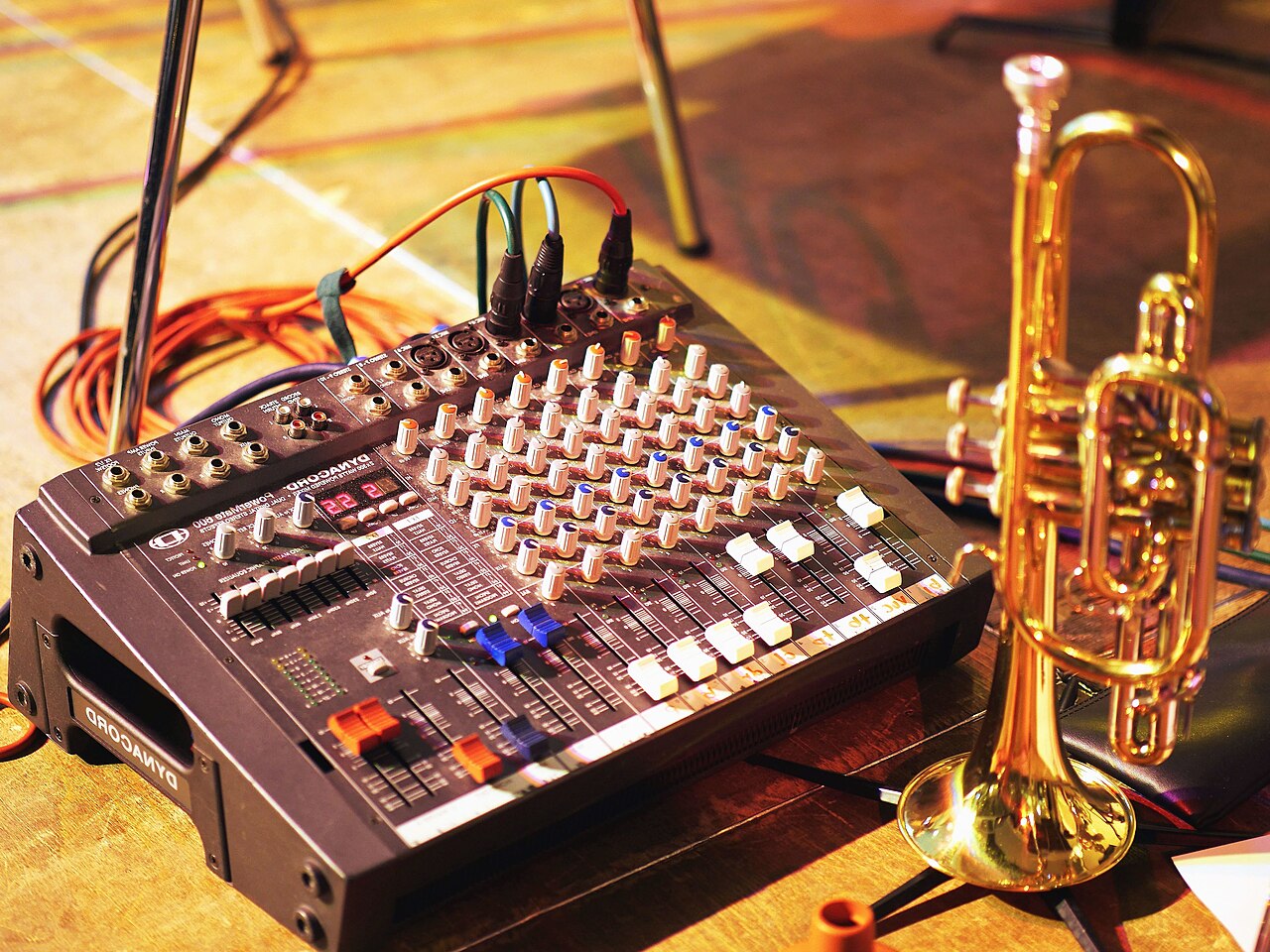
hpgruesen · CC0
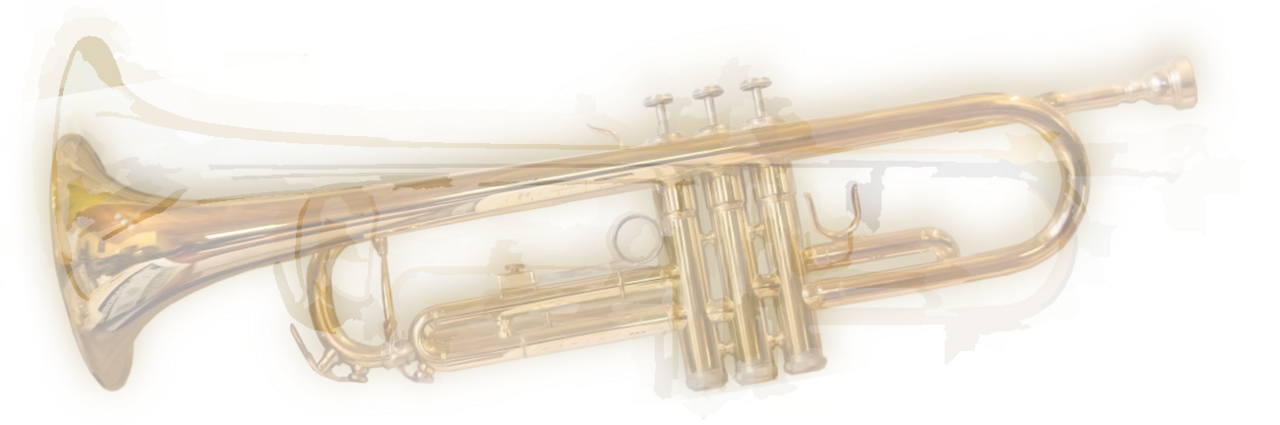
The trumpet is a brass instrument known for its bright, powerful sound. It is used in a wide variety of musical genres, from classical orchestras and concert bands to jazz ensembles and popular music, and is also a common instrument in school bands. The most common type of trumpet is a transposing instrument in B♭, with pitches sounding a whole step lower than written.
- field
- Musical instrument
- known_for
- Brass instrument used in art music, jazz, and popular music; transposing instrument in B♭
- material
- Primarily brass tubing
- valves
- Three (or sometimes four) piston or rotary valves
Lore & Background
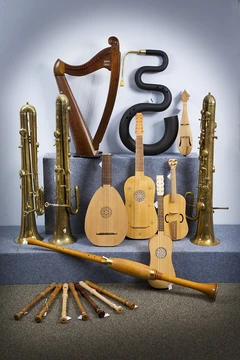
Trumpet-like instruments have historically been used as signaling devices in battle or hunting, with examples dating back to the 2nd Millennium BC. They began to be used as musical instruments only in the late 14th or early 15th century. The earliest trumpets include Tutankhamun's bronze and silver trumpets from his grave in Egypt, bronze lurs from Scandinavia, and metal trumpets from China. The Oxus civilization in the 3rd millennium BC in Central Asia had trumpets with decorated swellings in the middle, made out of one sheet of metal. The natural trumpets of the late Middle Ages and Renaissance consisted of a coiled tube without valves which could only produce the notes of a single overtone series. The development of the upper, 'clarino' register by specialist trumpeters—notably Cesare Bendinelli—would lend itself well to music of the Baroque era, known as the 'Golden Age of the natural trumpet.' During the classical and romantic periods, the trumpet was relegated to a secondary role by most major composers owing to the limitations of the natural trumpet. Modern trumpets generally have three (or sometimes four) valves which are used to change their pitch. Most trumpets have piston valves, although some have rotary valves. The use of rotary-valved trumpets is more common in orchestral settings, especially in German and German-style orchestras. Sound is produced by vibrating the lips in a mouthpiece, which starts a standing wave in the air column of the instrument.
Reader's Guide
The trumpet's significance lies in its long history as both a signaling instrument and a musical instrument, evolving from ancient battlefields and religious ceremonies to the concert hall and jazz club. Its development from natural trumpets without valves to fully chromatic modern instruments with valves allowed it to become a versatile voice in Western art music, particularly in Baroque clarino playing and later in orchestral and solo repertoire. The trumpet is also central to jazz and popular music, and its inclusion in school bands has made it widely accessible. The instrument's construction—typically of brass tubing bent twice into a rounded rectangular shape—and its use of valves to change pitch have remained consistent since the late 15th century. The trumpet family includes the piccolo trumpet (highest register in the brass family) and the bass trumpet (pitched one octave below the standard B♭ or C trumpet). The cornet is similar but has a conical bore, while the trumpet has a cylindrical bore. The trumpet's legacy continues as a staple of diverse musical traditions worldwide.
Did You Know?
- The English word 'trumpet' was first used in the late 14th century, from Old French 'trompette'.
- The most common trumpet is pitched in B♭, with a tubing length of about 1.48 m (4 ft 10 in).
- Early trumpets did not provide means to change the length of tubing; modern instruments generally have three or four valves.
- The Salpinx was a straight trumpet 62 inches long, made of bone or bronze, and contests featuring it were part of the original Olympic Games.
Linguistic Roots and Cross-Cultural Naming
The word clarion traces back to three Latin roots: the noun clario meaning trumpet, the adjective clarus meaning bright or clear, and the verb claro meaning to make clear. From this shared foundation, an extraordinary proliferation of spellings and forms spread across Europe. French speakers generated a bewildering array—clairin, clarin, clerain, clerin, clairon, claroncel, claronchiel—with clairon eventually becoming the dominant form. Germans used clareta, which shifted to clarin by the mid-sixteenth century. Notably, none of these variants carried a single standardized meaning; writers and musicians were often uncertain whether they referenced a specific physical instrument or simply the trumpet's upper register, and that ambiguity persisted for centuries.
From Straight Tubes to Bent Brass
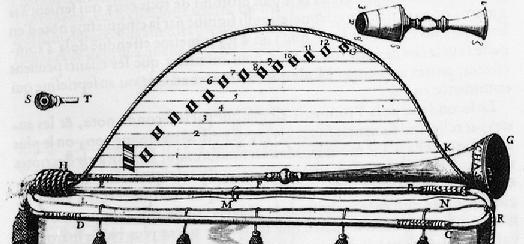
After Rome's collapse, straight sheet-metal trumpets vanished from most of Europe, replaced by curved horns fashioned from cowhorn and wood. Meanwhile, the straight tubular trumpet survived in the Middle East and Central Asia as the nafir and karnay. European contact with these instruments during the Crusades and the Reconquista reignited interest in metal trumpet construction. Spain produced the añafil, France the buisine, and by the 1400s, European makers had rediscovered a technique lost since Roman times: bending tubing without destroying it. This breakthrough allowed long, unwieldy straight trumpets to be folded into compact, manageable forms. By 1511, the theorist Virdung published engravings of these folded instruments, one labeled clareta, which would evolve into the clarion. The narrowing of the bore and careful control over how gradually the tube widened transformed the instrument's voice from a harsh, braying tone into something more refined and courtly, reshaping an entire family of brass instruments.
The Clarion in War, Court, and Guild Records
In medieval warfare the trumpet's sound was often described in unflattering terms, likened to the braying of a donkey. Yet the clarion carved out a distinct niche within military and ceremonial contexts. French historical records contain phrases pairing trumpets and clarions together, suggesting they served complementary roles. Jean Nicot, compiling his French dictionary, noted that the clarion was a treble instrument paired with trumpets handling tenor and bass parts, and that it was employed by cavalry and marines. He also observed that the Moors and the Portuguese, who had adopted Moorish customs, used the clarion. Geoffrey Chaucer, in The Knight's Tale, listed clariounes alongside pipes, trumpets, and nakers, all blowing bloody sounds in battle. Trade guild records from London's Goldsmith's Company went further, specifying that a clarion weighed roughly seventy percent less than a standard trumpet, hinting at a physically distinct and considerably lighter instrument.
Clarino as a Compositional Voice
By the early seventeenth century, clarin and clarino had transcended their identity as physical instruments and become established musical terms. In Germany and Spain, composers from the sixteenth through nineteenth centuries used clarin to designate the highest trumpet part in a score. Italian composers adopted clarino for a similar purpose, though notably not specifically for trumpets. The term referred to melodic writing in the trumpet's upper register, characterized by a soft, singing, and melodious tone—quite different from the harsh war-cry of earlier centuries. This shift reflected broader technological improvements: as trumpets gained the ability to withstand greater pressure and reach higher notes, the upper register became the defining feature associated with the clarion name.
Common Misconceptions (Editorial)
A common misconception is that the trumpet has always been primarily a musical instrument. In fact, trumpet-like instruments were historically used as signaling devices in battle or hunting and only began to be used as musical instruments in the late 14th or early 15th century. Another misconception is that all trumpets have piston valves; while most do, some have rotary valves, and the use of rotary-valved trumpets is more common in orchestral settings, especially in German and German-style orchestras.
Why It Matters (Editorial)
The trumpet's enduring appeal lies in its remarkable versatility and historical significance, spanning millennia from ancient battlefields and Olympic contests to modern concert halls and jazz clubs. Its bright, powerful sound continues to serve as a defining voice across genres, proving that a design refined over centuries can still feel essential and expressive in contemporary music.
Gallery

Frequently Asked Questions
Who is The Trumpet?
The Trumpet is a brass instrument featured in Musical Instruments 1-22, celebrated for its piercing, brilliant tone that cuts through any ensemble. It has served as both a ceremonial signaling voice and an artistic performer since antiquity.
What are The Trumpet's powers and role in the ensemble?
The Trumpet acts as the commanding, bright voice of the brass section, delivering fanfares, melodic leads, and rhythmic punches across classical, jazz, and pop settings. Its three (or occasionally four) piston or rotary valves let it shift pitch rapidly, giving it a dramatic and versatile range.
How does The Trumpet's transposition quirk work?
The Trumpet is a transposing instrument in B♭, so when a player reads a written C the actual sounding pitch is a B♭—a whole step lower. This built-in offset is why trumpet parts are always notated higher than the pitch the audience actually hears.
Why is The Trumpet important in the Musical Instruments canon?
The Trumpet bridges multiple genres and eras, appearing in orchestras, concert bands, jazz combos, and school ensembles, making it one of the most universally recognized brass voices. Its powerful projection and instantly identifiable metallic ring give it a signature presence in virtually any musical context.
What materials make up The Trumpet's body?
The Trumpet's body is primarily formed from brass tubing, shaped into a coiled cylindrical bore that ends in a flared bell. This metallic construction is what produces the characteristic bright, ringing timbre that defines its sound.
More in Musical Instruments 1-22
Spotted an error? Know more?
This is a living reference — every entry is fact-audited, and reader corrections feed straight into our audit queue. Suggest an edit · See this site's audit record