The Harp
Ancient stringed instrument plucked by fingers, found worldwide.

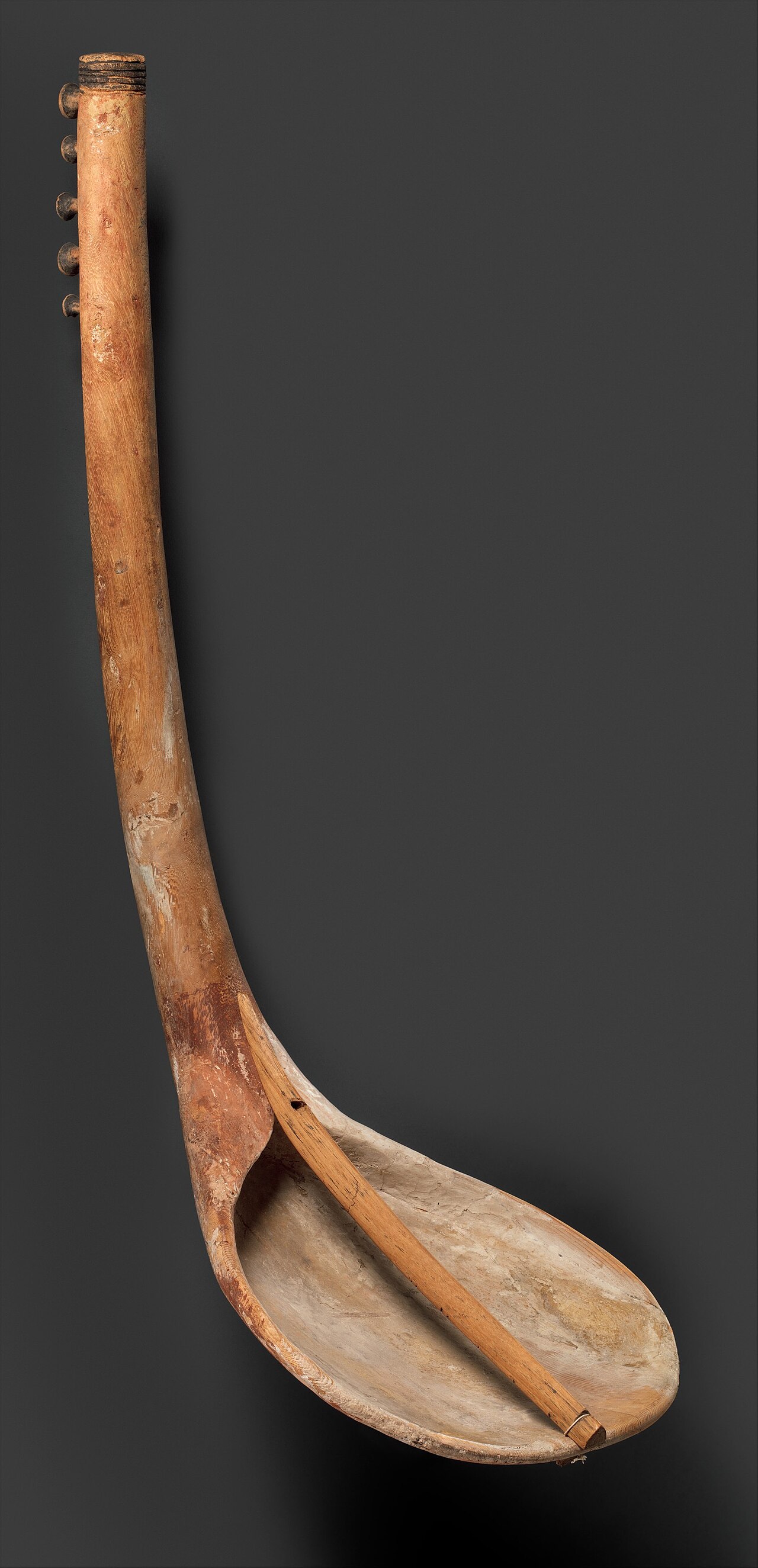
Unknown; photo released as public domain by the Metropolitan Museum of Art · CC0
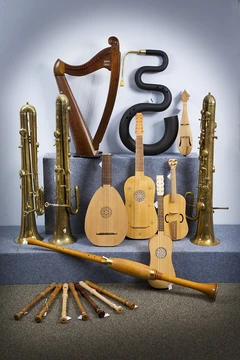
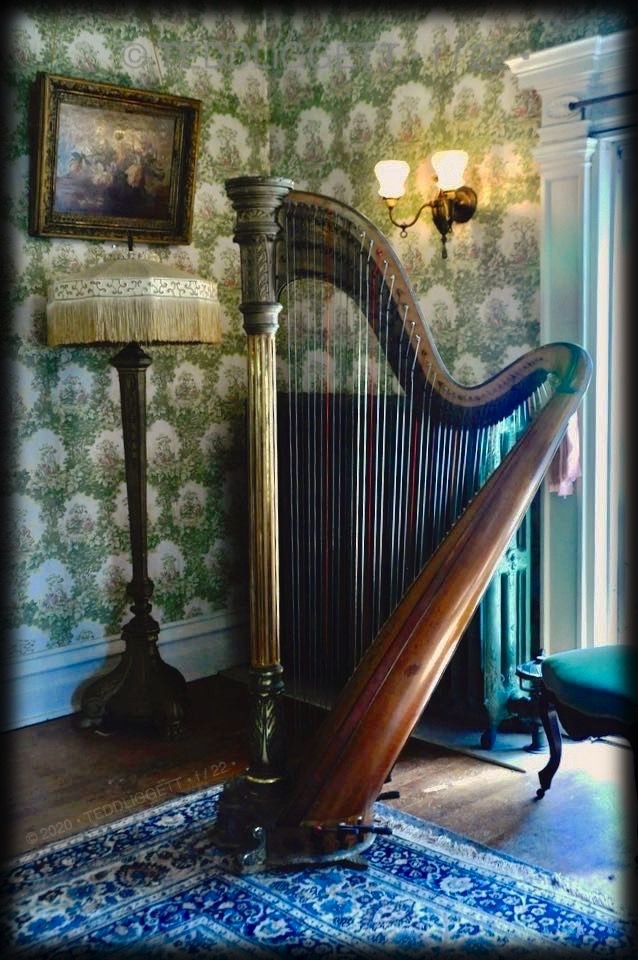
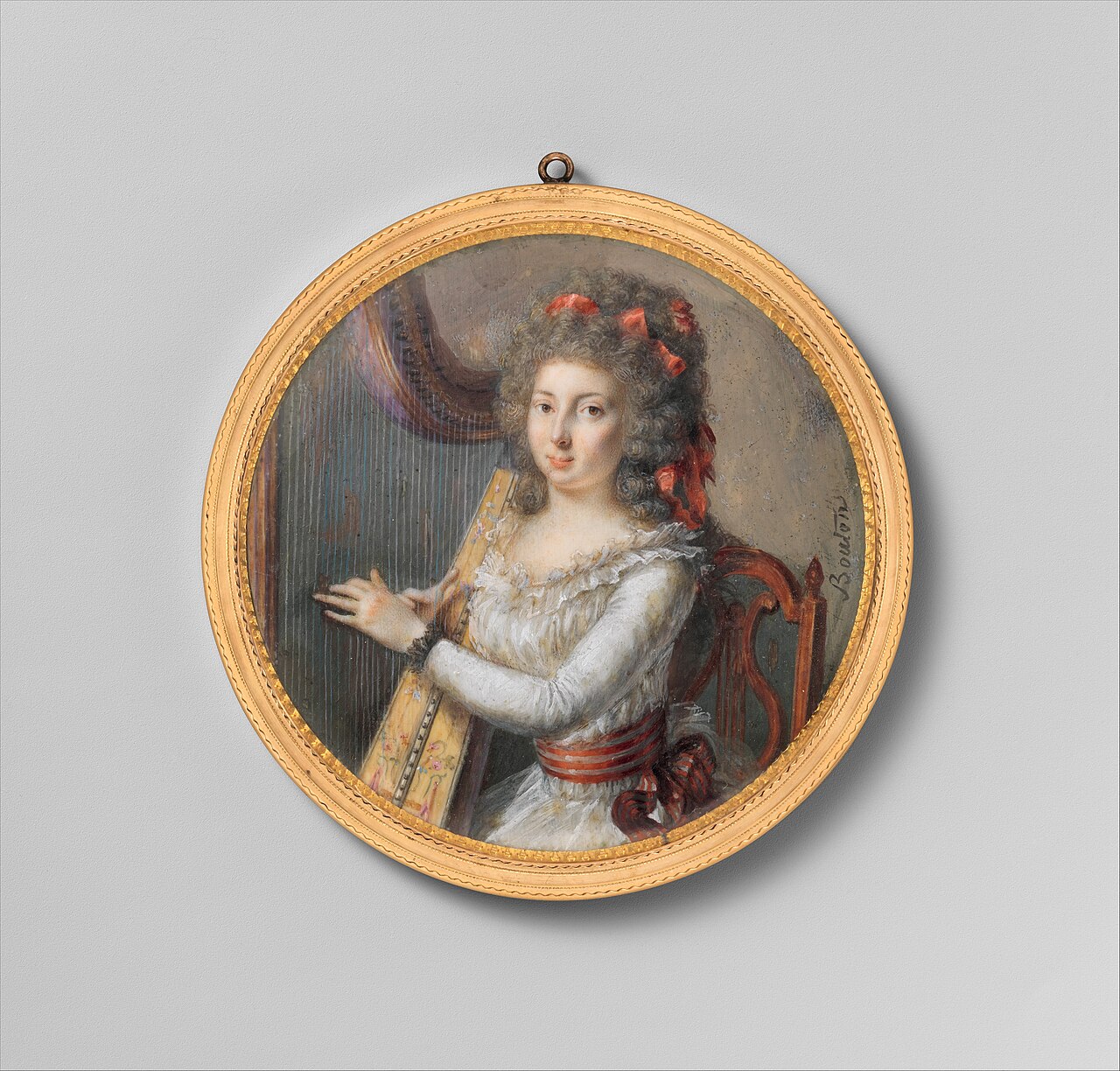
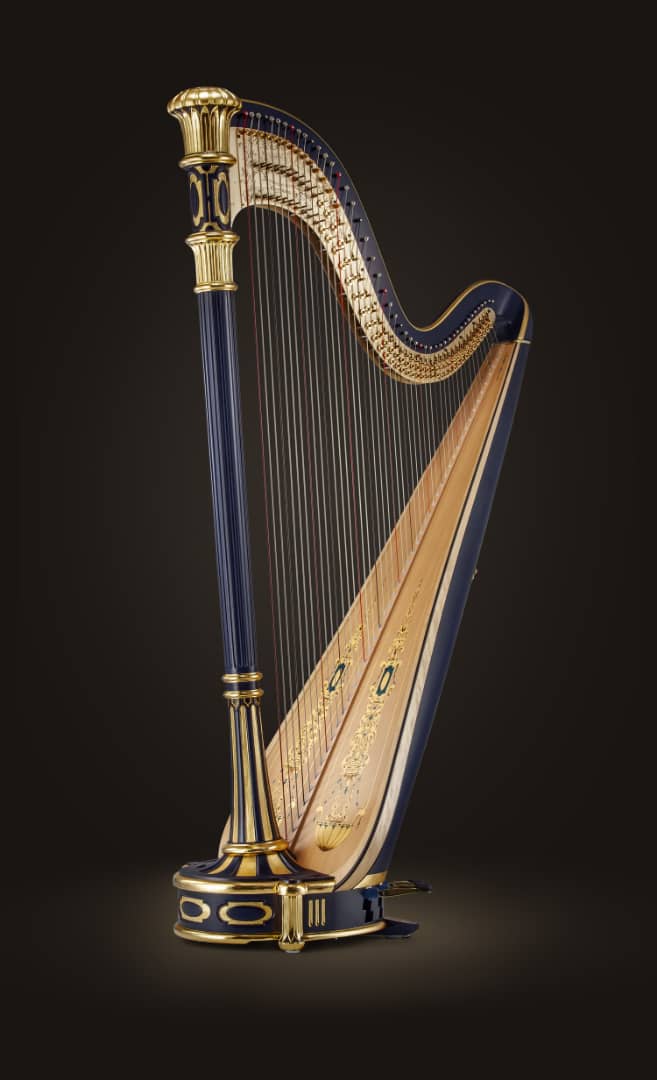
The harp is a stringed musical instrument with individual strings running at an angle to its soundboard, plucked with the fingers. It can be played seated or standing, is most commonly made of wood and triangular in shape, and some variants have multiple rows of strings and pedal attachments. Harps have been known since antiquity in Asia, Africa, and Europe, dating back at least as early as 3000 BCE, and have spread across the Americas and Africa, with distinct designs emerging in various regions.
- field
- Musical instrument
- known_for
- Ancient stringed instrument with symbolic political traditions, used in logos including in Ireland
- earliest_known_date
- c. 3000 BCE
- earliest_depictions
- Mesopotamia (Iraq), Persia (Iran), Egypt
- materials
- Sinew, gut, plant fibre, braided hemp, cotton cord, silk, nylon, wire
Lore & Background
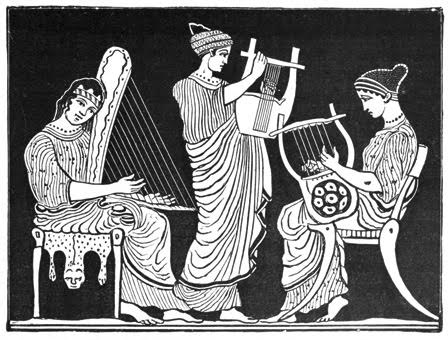
The earliest harps and lyres were found in Sumer, c. 2500 BCE, with several harps excavated from burial pits and royal tombs in Ur. The oldest depictions of harps without a forepillar appear in wall paintings of ancient Egyptian tombs in the Nile Valley from the mid 3rd millennium BCE, showing an arched harp resembling a hunter's bow. In South Asia, Mesolithic era paintings from Bhimbetka show harp playing, and an arched harp is depicted on an Indus seal. The Tamil Sangam literature describes the harp and its variants as early as 200 BCE, with iconographic evidence of the yaal appearing in temple statues dated as early as 600 BCE. The ancient veena survives today in Burma as the saung harp.
Reader's Guide
The harp's significance lies in its ancient origins and widespread cultural presence across Asia, Africa, Europe, and the Americas. It has been used in traditional folk music, religious contexts, and royal courts, evolving from simple arched forms to complex pedal harps. In Europe, the triangular three-part frame appeared on 8th-century Pictish stones in Scotland and in early 9th-century French manuscripts. By the Baroque period, chromatic strings were added, and in the 17th century, hooks were developed to raise pitch, leading to the single-action pedal harp in the 18th century. The double mechanism, capable of raising pitch by one or two half steps, was later developed by the Erard company. In the Americas, harps derived from Spanish Baroque harps became national instruments in countries like Paraguay, where the Paraguayan harp has around 36 strings and is played with fingernails. The Andean harp is widespread in Peru, Bolivia, and Ecuador, and the arpa llanera in Venezuela accompanies joropo music. The harp also holds symbolic political traditions, appearing in logos such as that of Ireland. Its legacy continues in both classical and folk traditions worldwide.
Did You Know?
- Ancient depictions of harps were recorded in Mesopotamia, Persia, Egypt, India, and China.
- Historically, harp strings were made of sinew, gut, plant fibre, braided hemp, cotton cord, silk, nylon, and wire.
- In pedal harp scores, double flats and double sharps should be avoided whenever possible.
- The Paraguayan harp is that country's national instrument and has around 36 strings.
A Universe Sorted by Sound
The page organizes instruments into major families: percussion (subdivided into idiophones and membranophones), wind instruments (aerophones), stringed instruments (chordophones), keyboard instruments, and electronic instruments (electrophones). This mirrors the Hornbostel-Sachs classification system referenced in the See also section. The structure reveals how musicians and scholars have long sought to categorize the vast array of sound-producing devices humanity has created. Each category represents a fundamentally different mechanism for generating tone—striking, vibrating strings, moving air, pressing keys, or manipulating electricity. The presence of both traditional and modern instruments within these categories shows how the framework accommodates everything from ancient folk traditions to contemporary electronic synthesis. The Other percussion instruments subcategory further demonstrates that some instruments resist easy classification, occupying a liminal space between the standard families.
The Unusual Percussion Family
Among the most eclectic groupings on the page is the Other percussion instruments category, which gathers instruments that do not fit neatly into idiophones or membranophones. This collection reads like a tour through global ingenuity: the Glass harp and Glass harmonica produce sound through vibrating glass, while the Crystallophone and Glasschord extend that principle in different ways. Water-based instruments like the Hydraulophone, Sea organ, Suikinkutsu (a Japanese water zither), and Waterphone demonstrate how flowing liquid can become a musical medium. The list spans continents and centuries—Jhyamta, Khmuoh, Kong chmol, and Sênh tiền carry the weight of Asian folk traditions, while the Monkey stick, Plasmaphone, Pyrophone, and Quintephone suggest more experimental or modern approaches. The Shishi-odoshi from Japan and the Tetzilacatl add further cultural specificity. Together, these instruments form a mosaic of human creativity, each one a unique answer to the question of how to make rhythm and melody from materials as varied as glass, water, and exotic unknowns.
The Keyboard Spectrum
The keyboard instruments section reveals an extraordinary breadth of design philosophy. At one end sit the classical and traditional forms: the Square piano, Virginals, Claviorgan, and Claviharp represent centuries of mechanical string-striking and plucking technology. The accordion family appears in multiple variants—Chromatic button, Diatonic button, Free bass, Schrammel, and Steirische Harmonika—showing how a single concept of bellows-driven reeds has been adapted across different musical cultures. The Indian harmonium bridges South Asian tradition with the keyboard paradigm. Then there are the electric and electronic entries: the Hammond organ, Electronic organ, Electronic keyboard, and Honky Tonk piano represent the mid-to-late twentieth century's electrification of keyboard music. The Orchestron, Minipiano, Physharmonica, Player piano, Reed organ, and Terpodion fill out a picture of relentless experimentation. Each instrument in this list answers the same fundamental question—how to map notes onto a row of keys—but arrives at wildly different solutions.
Beyond the Page: Context and Connections
The See also section of this entry opens windows into broader musical worlds. A dedicated list of medieval musical instruments invites readers to trace how the instruments catalogued here evolved from earlier eras. The reference to fictional musical instruments, drawn from a broader fictional music entry, acknowledges that the imagination has extended beyond what exists, creating speculative soundscapes for stories and games. The list of folk music traditions reminds us that every instrument in these categories was born within a living cultural practice rather than in a laboratory. And the Hornbostel-Sachs numbering system, referenced as an organizing principle, connects this practical catalogue to a rigorous academic taxonomy developed to classify all known instruments by their sound-producing mechanism. Together, these cross-references position the instrument list not as a static inventory but as a node in a vast network of history, culture, scholarship, and creative invention. The page's structure itself—moving from percussion through wind, strings, keyboards, and electronics—mirrors the historical progression of musical technology.
Common Misconceptions (Editorial)
- Some may assume the harp originated only in Europe, but the facts show it was known in Asia, Africa, and Europe since at least 3000 BCE, with earliest depictions recorded in Mesopotamia, Persia, Egypt, India, and China. - Others might think the modern pedal harp is the only historic form, but ancient and regional variants include arched harps without a forepillar, multiple-row harps, and instruments like the yaal and saung harp. - A common belief that harp strings were always made of metal is incorrect; historically they were made of sinew, gut, plant fibre, braided hemp, cotton cord, silk, nylon, and wire.
Why It Matters (Editorial)
The harp endures because it bridges ancient and modern worlds, appearing in sacred tombs, royal courts, and contemporary national symbols alike. Its remarkable adaptability—from the arched hunter’s bow of Egyptian wall paintings to the Paraguayan national instrument—shows how a single instrument can carry distinct cultural identities while remaining a universal emblem of music and expression.
Gallery

Frequently Asked Questions
What is The Harp?
The Harp is an ancient stringed instrument whose individual strings are set at an angle to the soundboard and are plucked directly with the fingers. It is performed either seated or standing and is most often built from wood in a triangular frame.
How old is The Harp?
The instrument has been documented across Asia, Africa, and Europe since roughly 3000 BCE, making it one of the oldest continuously played instruments known to us. Its earliest surviving depictions come from Mesopotamia, Persia, and Egypt.
What materials make up The Harp's strings?
Historically, harp strings have been crafted from sinew, gut, plant fibre, braided hemp, cotton cord, silk, nylon, and wire. Modern variants may also feature multiple rows of strings and pedal mechanisms for altering pitch.
What does The Harp look like?
The instrument is most commonly triangular in shape and constructed primarily from wood, with strings running at an angle to the soundboard. Some regional designs incorporate multiple rows of strings and pedal attachments to expand the playable range.
Why is The Harp culturally significant?
The Harp carries deep symbolic and political weight in several traditions, most prominently appearing in the national emblem of Ireland. Its presence across the Americas, Africa, Asia, and Europe reflects centuries of regional design variation and widespread cultural adoption.
More in Musical Instruments 1-22
Spotted an error? Know more?
This is a living reference — every entry is fact-audited, and reader corrections feed straight into our audit queue. Suggest an edit · See this site's audit record