The Oboe
Double-reed woodwind that tunes orchestras with its distinctive A.

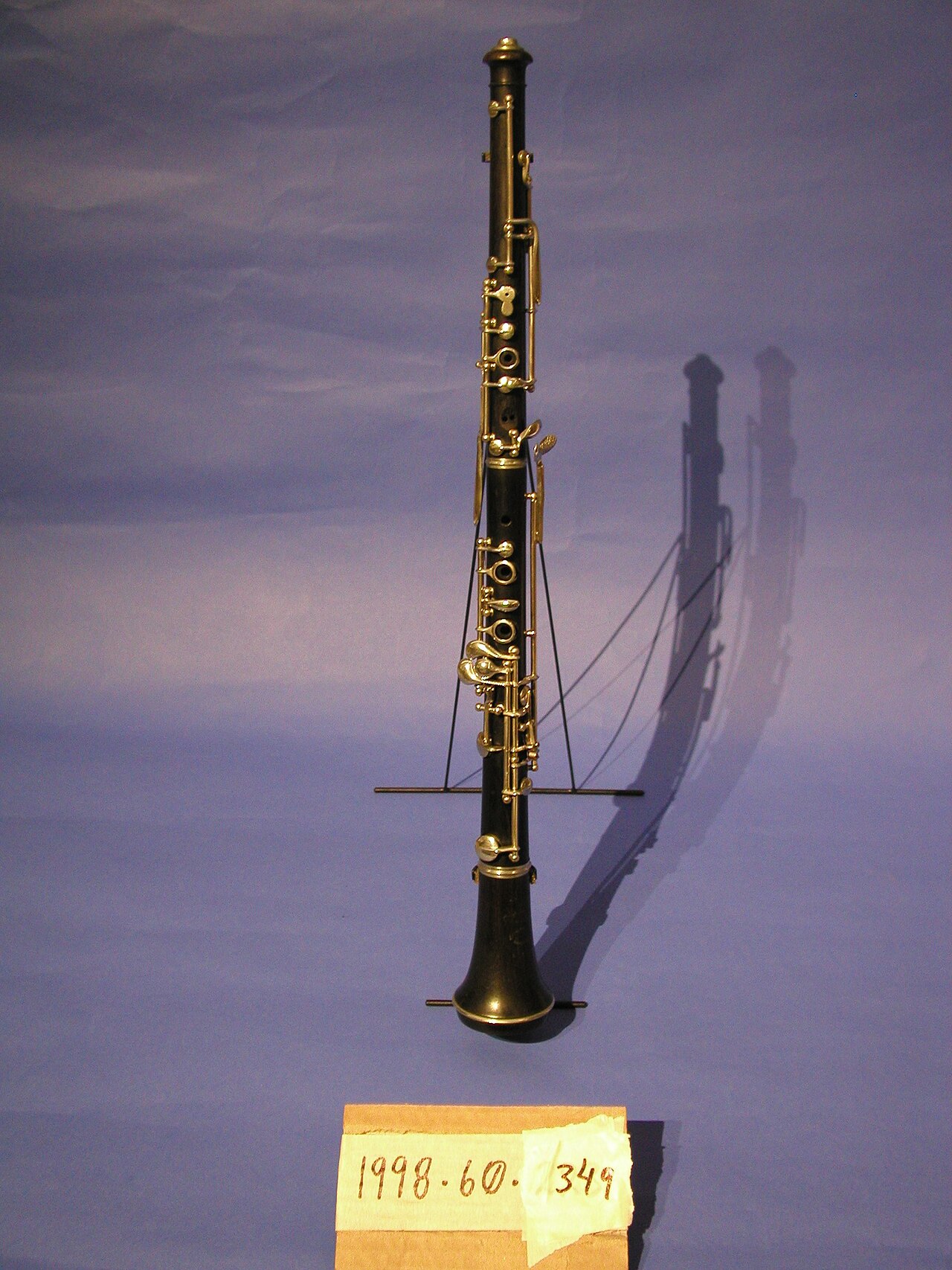
Vincenz Kohlert & Sons · CC BY 4.0
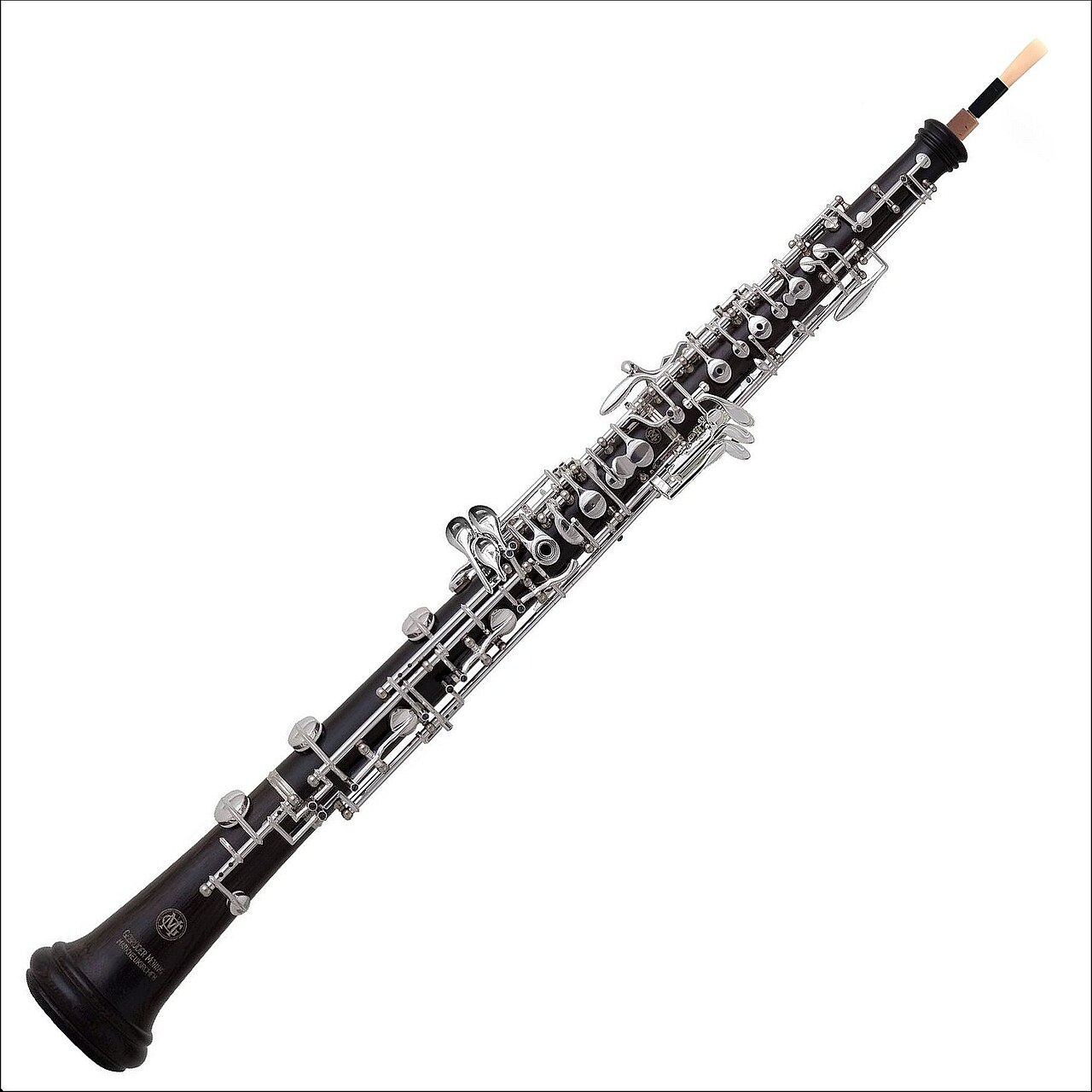
The oboe is a double-reed woodwind instrument, typically made of wood but also of synthetic materials. It is known for its penetrating, bright tone and is widely used as an orchestral and solo instrument, notably providing the tuning A for symphony orchestras.
- type
- Double-reed woodwind instrument
- common variant
- Soprano oboe in C
- length
- Roughly 65 cm (25+1⁄2 in)
- range
- Usually B♭3 to G6
- material
- Wood, plastic, resin, or hybrid composites
- player called
- Oboist
Lore & Background
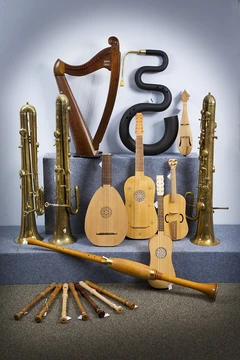
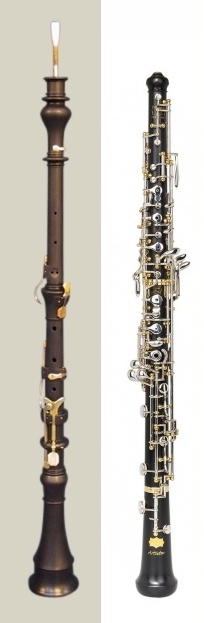
The oboe's roots trace back to ancient reed instruments of Egypt and Mesopotamia, as well as the Greek aulos and Roman tibia. Nearly lost in the West during the Dark Ages, it reappeared with the Arabic zurna in the 13th century, evolving through European bagpipes and becoming the French hautbois in the 17th century. The regular oboe first appeared in the mid-17th century, derived from the shawm. Major differences included division into three joints and elimination of the pirouette. The exact date and location of origin are obscure, with circumstantial evidence pointing to members of the Philidor and Hotteterre families. The Baroque oboe was generally made of boxwood with three keys, and its range extended from C4 to D6. The Classical period brought a narrower bore and additional keys, including a slur key. The range extended from C4 to F6. The oboe uses a double reed similar to that of the bassoon. Most professional oboists make their own reeds to control tone color, intonation, and responsiveness, while novices often buy commercial reeds made from Arundo donax.
Reader's Guide
The oboe holds a significant place in Western music as the instrument that tunes the orchestra, due to its secure pitch and penetrating sound. Its distinctive bright and penetrating voice allows it to be heard over large ensembles, making it a staple in symphony orchestras, concert bands, and chamber ensembles. The oboe is especially used in classical and film music, and occasionally in jazz, rock, pop, and folk genres. The instrument's sound is derived from its conical bore, which contrasts with the cylindrical bore of flutes and clarinets. The oboe's highest note is a semitone lower than the nominally highest note of the B♭ clarinet, while the clarinet's lowest note is a minor sixth deeper. Music for the standard oboe is written in concert pitch, and it has a soprano range. The reed is considered the most difficult part of the oboe, as individual reeds vary and are affected by temperature, humidity, altitude, and weather. Skilled oboists adjust their embouchure to compensate. The oboe's history includes its use as the main melody instrument in early military bands before being succeeded by the clarinet. The resurgence of interest in early music in the mid-20th century led to reproductions of Baroque oboes from historical instruments.
Did You Know?
- The oboe is widely recognized as the instrument that tunes the orchestra with its distinctive A.
- The oboe's sound has been described as 'bright and penetrating' and, in the play Angels in America, like 'that of a duck if the duck were a songbird'.
- Most professional oboists make their own reeds to control tone color, intonation, and responsiveness.
- The oboe's predecessor, the shawm, was also called hautbois, and the modern oboe first appeared in the mid-17th century.
A Voice Built to Cut Through
The soprano oboe, pitched in C and measuring roughly 65 centimeters, produces its signature bright and penetrating tone through a conical bore and flared bell. This design gives it a sonic edge over cylindrical-bore instruments like flutes and clarinets, making it remarkably audible even within large orchestral settings. Music for the oboe is written in concert pitch, meaning it is not a transposing instrument. This clarity of pitch, combined with its piercing quality, is precisely why orchestras worldwide rely on the first oboe to sound the tuning A before a performance begins.
The Reed: Heart and Hurdle of the Instrument
The oboe's double reed, fashioned from Arundo donax cane, is both its defining feature and its greatest source of difficulty. Because each reed is unique in its exact dimensions, scrape, and material properties, achieving a consistent tone across performances is a persistent challenge. Professional oboists typically craft their own reeds using gougers, pre-gougers, guillotines, shaper tips, and knives, tailoring each one to match their individual embouchure, oral cavity, and air support. Novices, for whom the process is time-consuming and technically demanding, usually purchase commercially available reeds in various hardness grades, with medium-soft being the most common starting point. Environmental factors—temperature, humidity, altitude, and even the age of the reed—shift the pitch and color of the sound. German and French reeds differ significantly in construction, producing distinctly different tonal results. To hedge against chipping or other mishaps, oboists prepare multiple reeds and often soak them in water before playing. Plastic reeds exist but remain rare compared to those for clarinet or saxophone.
From Ancient Reed Pipes to the Modern Oboe
The oboe's lineage stretches back to ancient reed instruments of Egypt and Mesopotamia, as well as the Greek aulos and Roman tibia. The instrument nearly vanished in Western Europe during the Dark Ages before reemerging in the thirteenth century through contact with the Arabic zurna, a Turko-Arabic double-reed pipe encountered during the Crusades. From there it evolved through European bagpipe traditions until the seventeenth century, when it crystallized into the French hautbois—the point at which modern oboe history is generally considered to begin. The name "hautbois" is a compound of haut (meaning "high" or "loud") and bois (meaning "wood" or "woodwind"), essentially describing a high-pitched woodwind. The regular oboe first appeared in the mid-seventeenth century, derived from the earlier shawm but distinguished by its division into three separate joints, which allowed for more precise manufacture.
The Oboe's Place in the Musical World
When the word "oboe" is used without qualification, it almost always refers to the soprano member of the family, as opposed to the bass oboe, the cor anglais (English horn), or the oboe d'amore. Today the instrument is a staple of symphony orchestras, concert bands, and chamber ensembles, and it features prominently in classical and film music. It also appears in certain folk traditions and is occasionally encountered in jazz, rock, pop, and popular music. Its role extends beyond performance: the League of American Orchestras endorses the practice of tuning to a concert A sounded by the first oboe, citing the instrument's secure pitch and penetrating tone as ideal qualities for this task. A musician who plays the oboe is called an oboist, and the instrument is typically constructed from wood, though synthetic materials such as plastic, resin, and hybrid composites are also used. The oboe's versatility—its ability to project in large ensembles, blend in small groups, and adapt across genres—has cemented its place as one of the most recognizable and indispensable voices in Western music.
Common Misconceptions (Editorial)
A common misconception is that the oboe is always made of wood. While it is typically made of wood, the facts confirm that it can also be made of synthetic materials such as plastic, resin, or hybrid composites. Another misconception is that the oboe and the modern shawm are essentially the same instrument; however, the oboe first appeared in the mid-17th century as a distinct derivation from the shawm, with key differences including division into three joints and elimination of the pirouette.
Why It Matters (Editorial)
The oboe endures because its penetrating, bright tone is irreplaceable in the orchestral soundscape, serving as the ensemble’s tuning anchor with its famous A. Its long lineage—from ancient reed instruments to the Baroque and Classical innovations—reflects a continuous human desire for expressive, reed-driven sound that balances technical refinement with raw, vocal-like emotion.
Gallery


Frequently Asked Questions
What is The Oboe?
The Oboe is a double-reed woodwind instrument, most commonly encountered in its soprano form pitched in C. It stands roughly 65 cm tall and is played by a performer known as an oboist.
What is The Oboe's signature role in the orchestra?
The Oboe is traditionally the instrument that sounds the concert A, setting the pitch for the entire symphony orchestra before a performance begins. This makes it the tonal anchor around which every other section tunes.
How does The Oboe produce its distinctive sound?
Unlike single-reed instruments, the Oboe uses a double reed—two thin strips of cane tied together—that vibrates between the player's lips to generate its piercing, bright timbre. The reed sits atop a conical bore, giving the instrument its characteristic penetrating voice.
What materials is The Oboe built from?
While the classic Oboe is carved from hardwood, modern versions are also crafted from plastic, resin, or hybrid composites. The choice of material affects both durability and the subtle color of the tone.
What is The Oboe's playable range?
The standard soprano oboe in C typically spans from B♭3 up to G6, covering roughly three octaves. This gives the oboist a voice that can soar into a brilliant upper register while still reaching a warm, reedy low end.
More in Musical Instruments 1-22
Spotted an error? Know more?
This is a living reference — every entry is fact-audited, and reader corrections feed straight into our audit queue. Suggest an edit · See this site's audit record