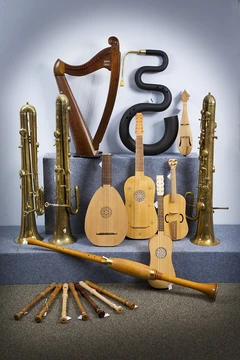
The Clarinet
Single-reed woodwind with cylindrical bore and flared bell.

Auckland Museum Collections from Auckland, Aotearoa New Zealand · CC BY 2.0
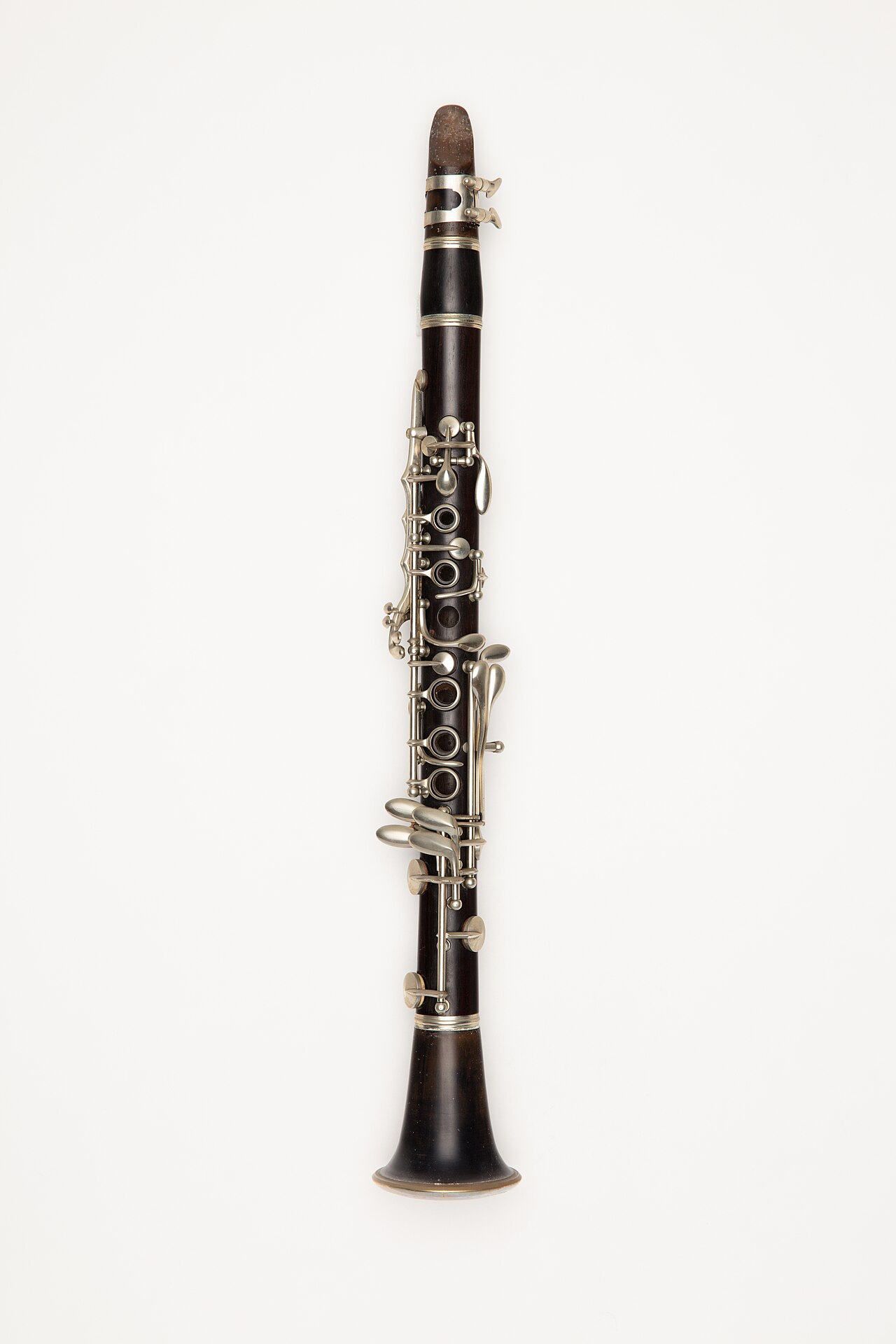
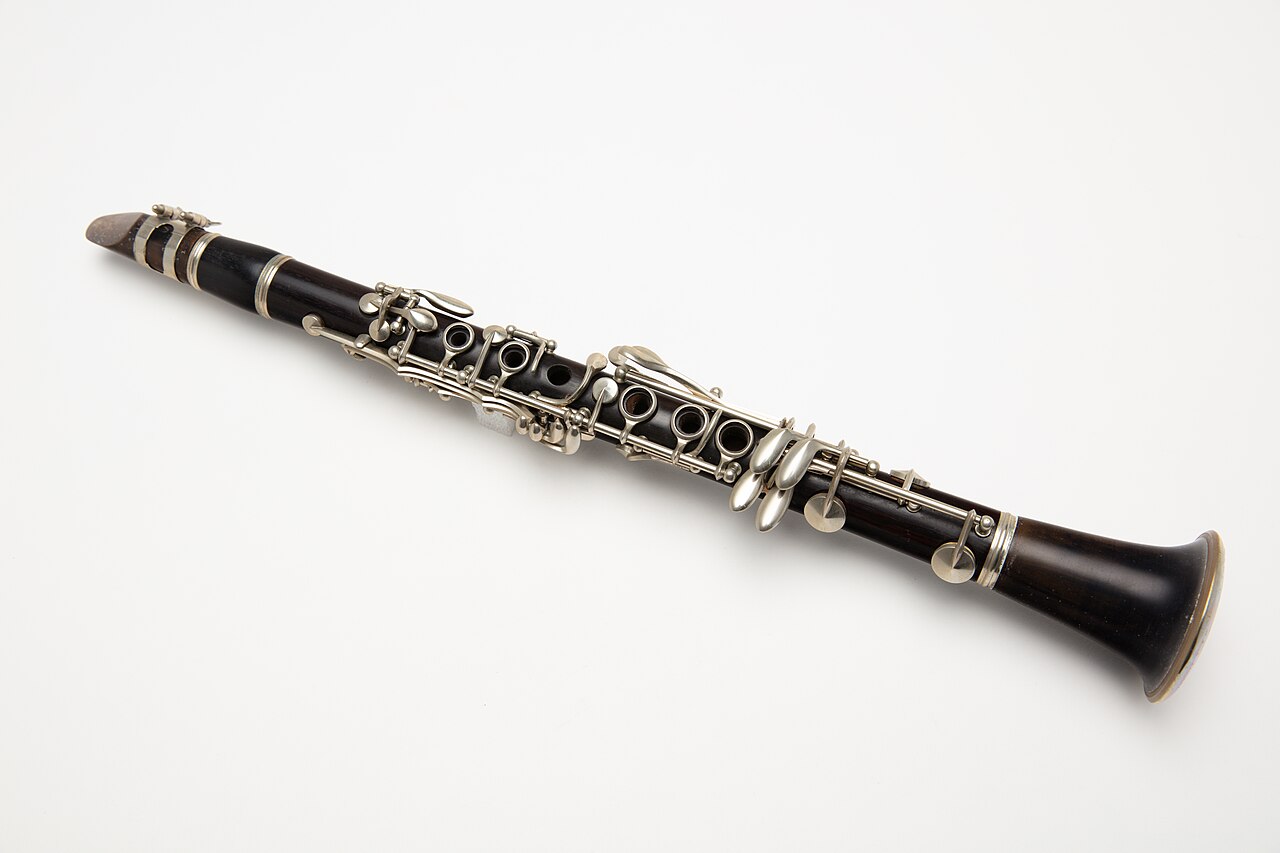
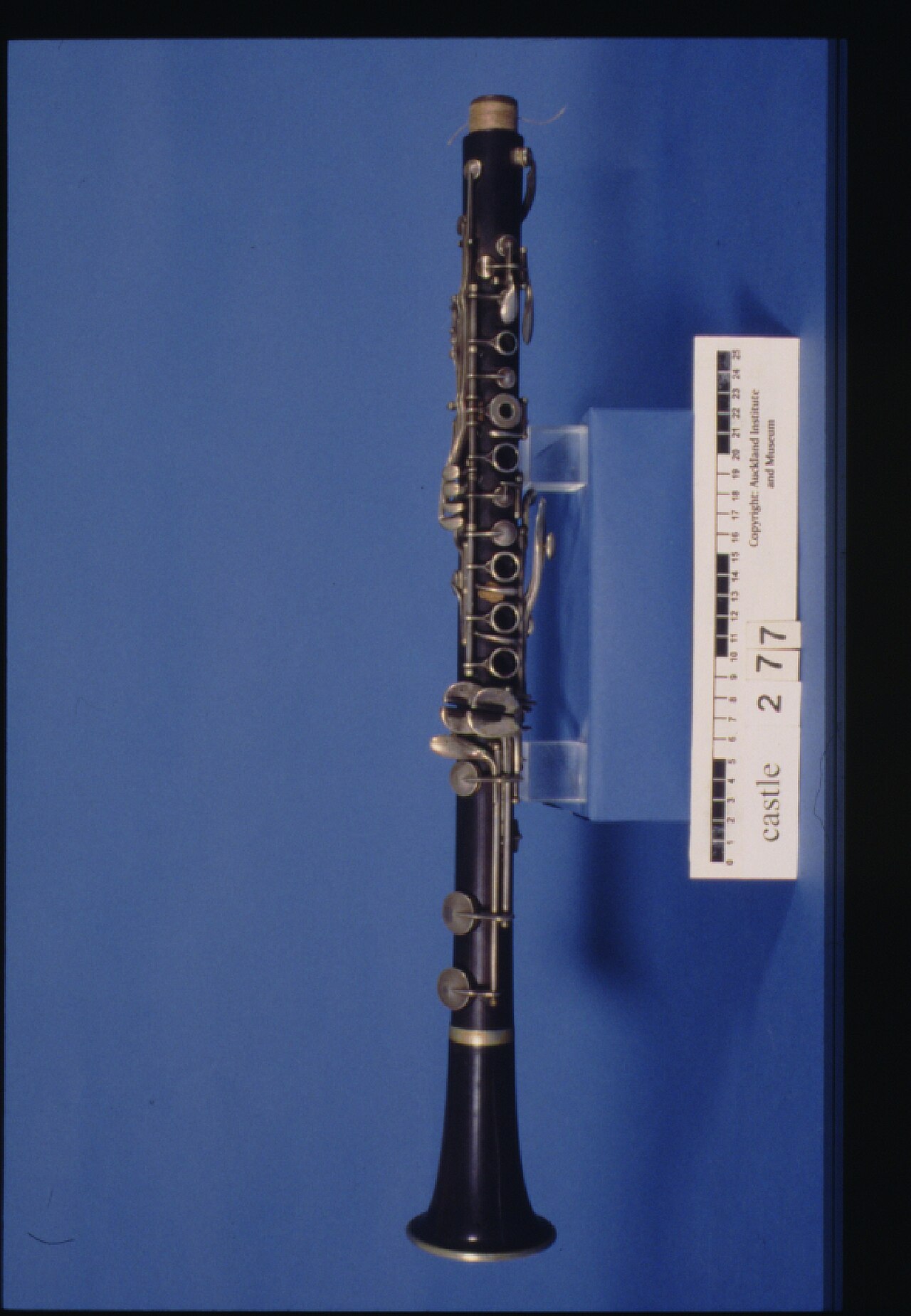
The clarinet is a single-reed musical instrument in the woodwind family, with a nearly cylindrical bore and a flared bell. It comprises a family of instruments of differing sizes and pitches, the largest woodwind family, ranging from the BB♭ contrabass to the A♭ piccolo. The B♭ soprano clarinet is the most common type, usually indicated by the word 'clarinet'.
- field
- Musical instrument
- known_for
- Single-reed woodwind instrument with cylindrical bore and flared bell; standard fixture of orchestras, concert bands, and various music styles
Lore & Background
The clarinet developed from a Baroque instrument called the chalumeau, which had a single-reed mouthpiece and cylindrical bore but lacked a register key, limiting its range. Around the beginning of the 18th century, German instrument maker Johann Christoph Denner (or possibly his son Jacob Denner) added two keys to an alto-register chalumeau, one enabling access to a higher register that started an octave and a perfect fifth above the first. Later, Denner lengthened the bell and added a third key to extend the pitch range downward. Over time, additional keywork and airtight pads were added to improve tone and playability. The word 'clarinet' may have entered English via French 'clarinette' or Provençal 'clarin', from Latin 'clarus' meaning 'clear'.
Reader's Guide
The clarinet's cylindrical bore is the main reason for its distinctive timbre, which varies between the three main registers: chalumeau, clarion, and altissimo. The A and B♭ clarinets have nearly the same bore and nearly identical tonal quality, though the A typically has a slightly warmer sound. The E♭ clarinet is brighter, and the bass clarinet has a deep, mellow sound. The clarinet is a standard fixture of the orchestra and concert band and is used in classical music, military bands, klezmer, jazz, and other styles. Today the Boehm system is standard everywhere except Germany and Austria, where the Oehler clarinet is still used. Some Dixieland players continue to use Albert system clarinets.
Did You Know?
- The clarinet family is the largest woodwind family, ranging from the BB♭ contrabass to the A♭ piccolo.
- The clarinet's second register does not begin an octave above the first, but an octave and a perfect fifth higher.
- Iwan Müller invented the stuffed pad, metal ligature, and thumb rest for the clarinet.
Common Misconceptions (Editorial)
It is sometimes thought that the clarinet's second register begins an octave above the first, but in fact it starts an octave and a perfect fifth higher. Another common error is that the clarinet was entirely invented from scratch in the 18th century; it actually developed from the earlier Baroque instrument called the chalumeau.
Why It Matters (Editorial)
The clarinet’s unique ability to bridge both delicate, lyrical passages and bold, robust tones has made it an indispensable voice in orchestral, concert band, and solo repertoire for centuries. Its enduring evolution—from the chalumeau to the modern instrument with intricate keywork—reflects a constant human drive to refine and expand musical expression, ensuring the clarinet remains a vital and versatile presence in nearly every musical genre.
Gallery



Frequently Asked Questions
What is The Clarinet?
The Clarinet is a single-reed woodwind instrument characterized by a nearly cylindrical bore and a flared bell. It is the most common and recognizable member of its instrument family.
How large is The Clarinet family?
It spans the largest range of any woodwind family, stretching from the BB♭ contrabass clarinet at the low end to the A♭ piccolo clarinet at the high end. The B♭ soprano clarinet is the default type most musicians simply call 'the clarinet.'
Where does The Clarinet appear in ensembles?
It is a standard fixture in symphony orchestras, concert bands, and a wide variety of other genres from jazz to klezmer to contemporary film scoring.
Why is The Clarinet considered important in the woodwind section?
Its cylindrical bore gives it a distinctive tonal quality that bridges the darker sound of the oboe and the brighter sound of the flute, making it a versatile harmonic and melodic anchor. Its wide range and agility have made it an indispensable voice in virtually every major ensemble setting.
More in Musical Instruments 1-22
Spotted an error? Know more?
This is a living reference — every entry is fact-audited, and reader corrections feed straight into our audit queue. Suggest an edit · See this site's audit record