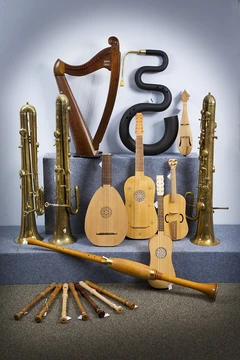
The Drum kit
A single-player percussion ensemble central to modern music.

Stephan Czuratis ( Jazz-face ) · CC BY-SA 2.5
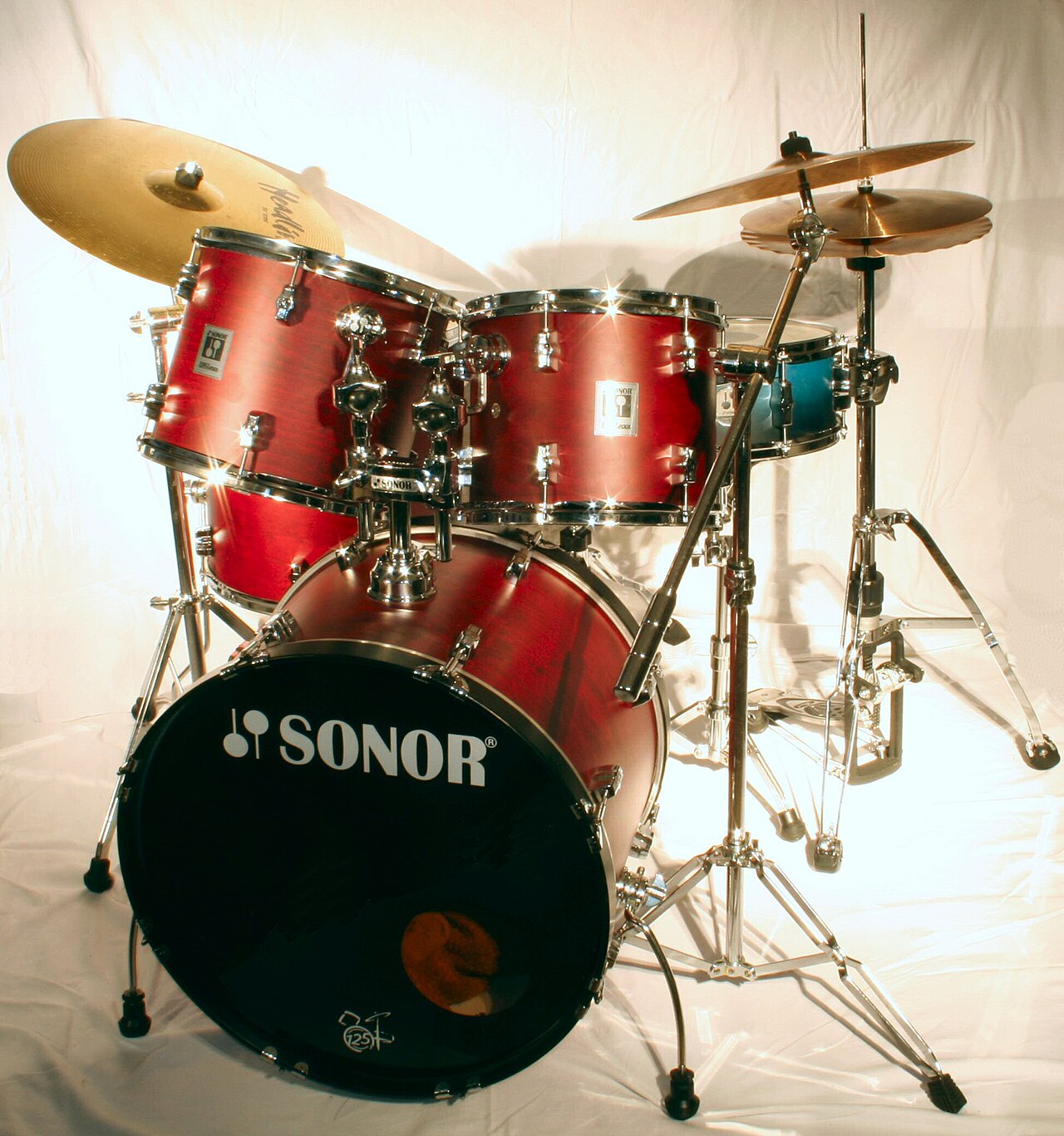
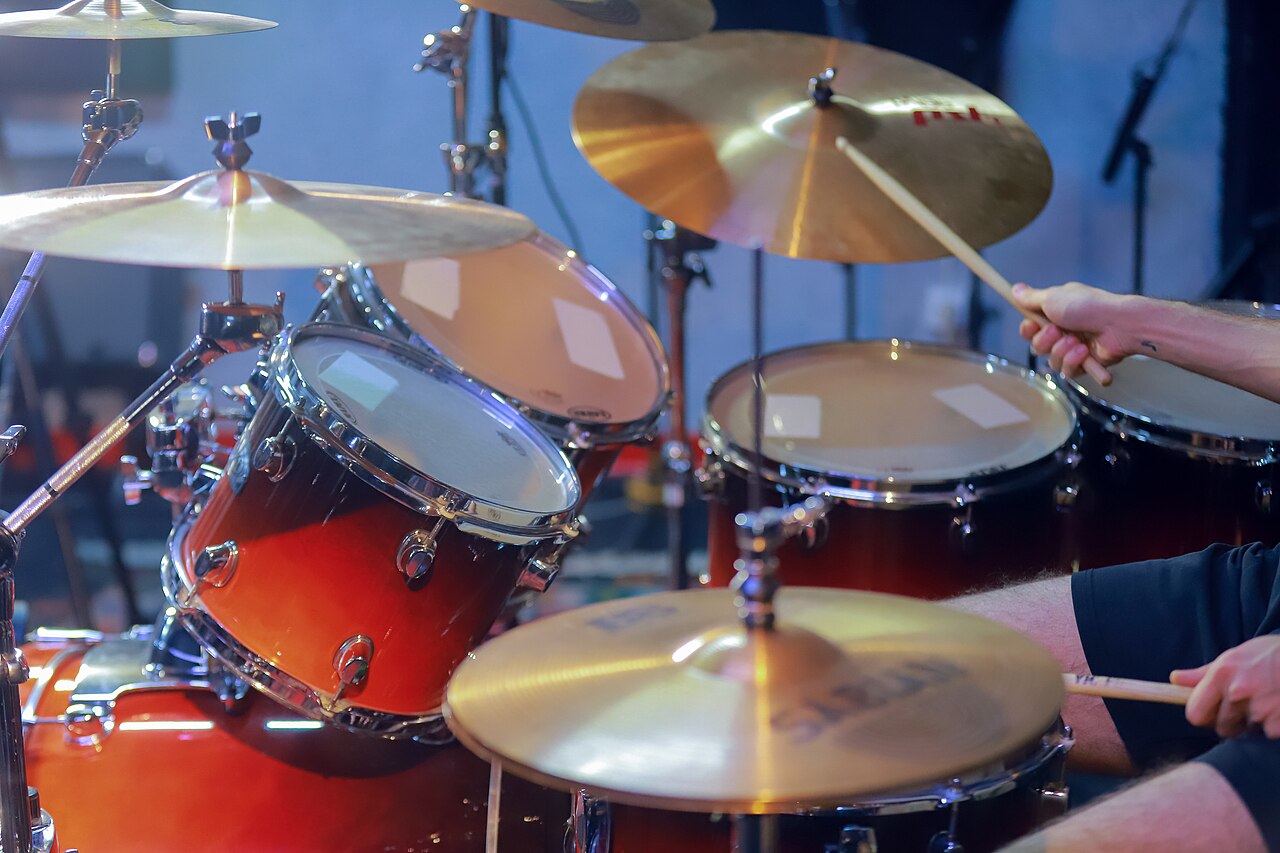
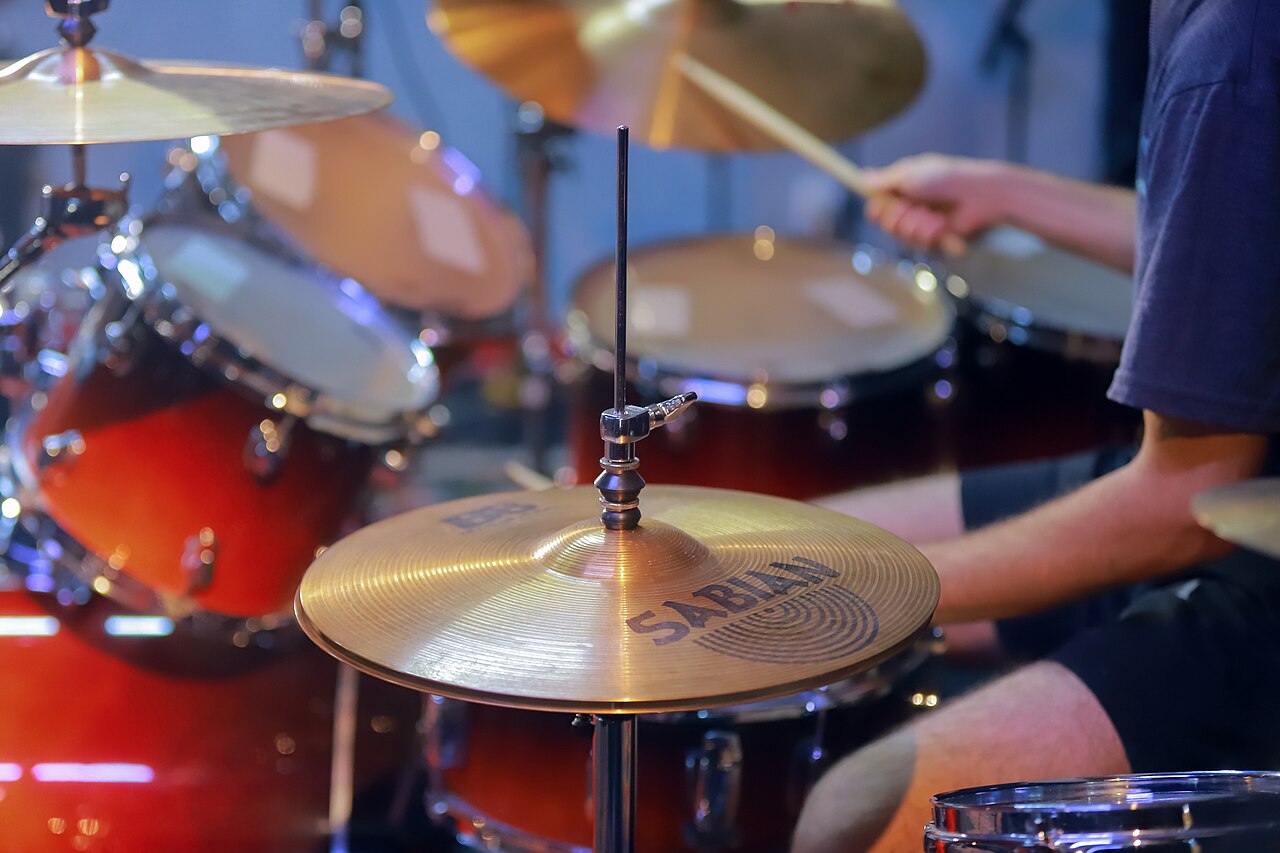
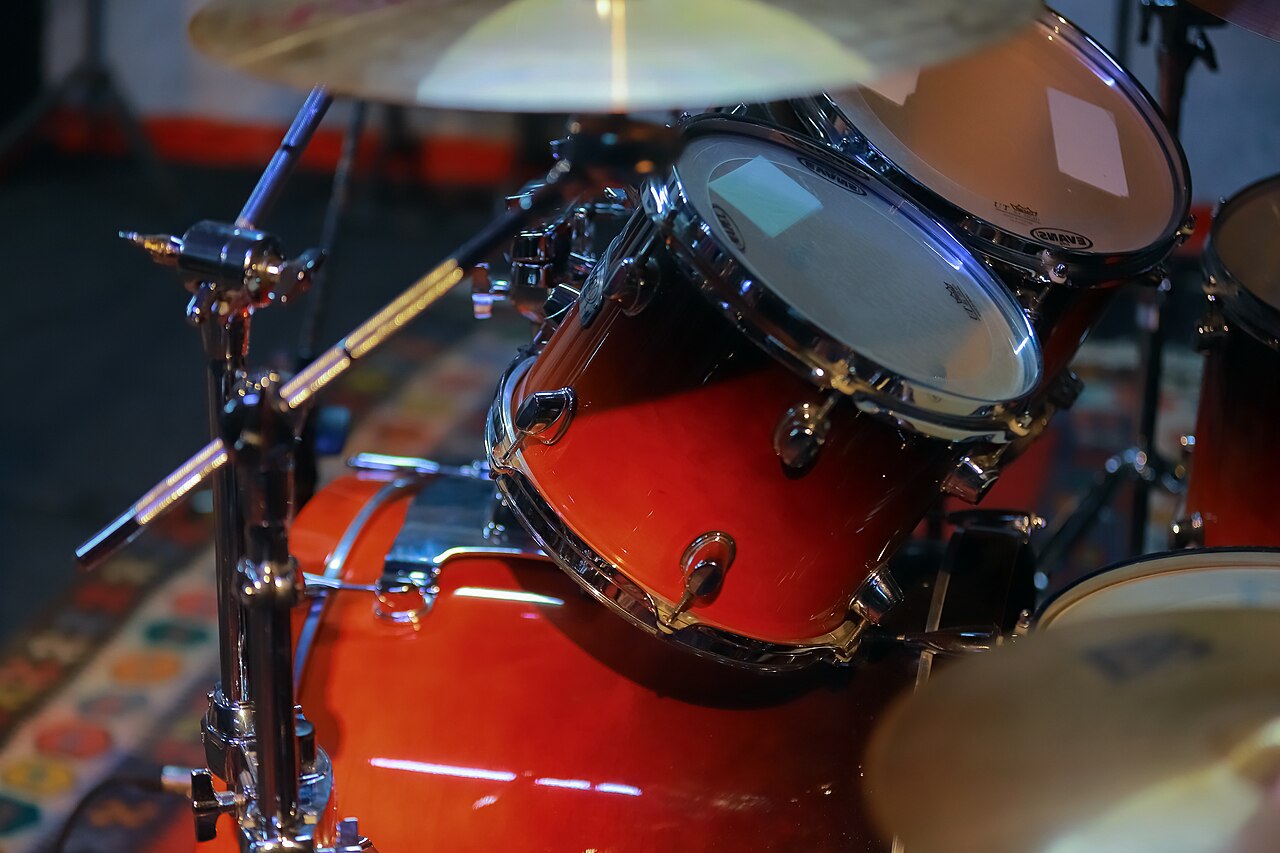
A drum kit, also known as a drum set or trap set, is a collection of percussion instruments arranged for a single musician. It typically includes drums, cymbals, and auxiliary percussion, played with sticks, brushes, or pedals. The drum kit is a standard part of the rhythm section in many popular and traditional music styles, from rock and pop to blues and jazz.
- field
- Musical instrument
- known_for
- Central part of rhythm section in popular music and jazz
- components
- Snare drum, bass drum, tom-toms, ride cymbal, crash cymbal, hi-hat
Lore & Background
By World War I, drum kits often used marching-band-style bass drums with suspended percussion items. The modern drum kit developed in the vaudeville era of the 1920s in New Orleans. Drummers like Baby Dodds, Zutty Singleton, and Ray Bauduc combined marching rhythms with bass drum, snare drum, and 'traps'—percussion from immigrant groups including miniature cymbals, tom toms, cowbells, and woodblocks. Budget constraints in theater pit orchestras led to metal consoles holding Chinese tom-toms and a 'contraption' tray for whistles and cowbells, dubbed 'trap kits'. Baby Dodds, playing with Louis Armstrong on Mississippi riverboats, modified the military setup, playing drum rims instead of woodblocks, hitting cymbals with sticks, and adding a side cymbal above the bass drum—the ride cymbal. William Ludwig developed the early low-mounted hi-hat after observing Dodds, who asked to raise it nine inches, creating the modern hi-hat. Dodds also popularized Chinese cymbals and used woodblocks and rims as quieter alternatives due to crude recording technology.
Reader's Guide
The drum kit's significance lies in its consolidation of multiple percussion instruments into a single player's setup, enabling one musician to provide the rhythmic foundation for ensembles across genres. Its development was driven by practical constraints: limited budgets in theater orchestras and the need for portable, versatile setups. The kit evolved from military and marching traditions, with innovations like the bass drum pedal and hi-hat stand allowing foot-operated playing. Drummers like Baby Dodds pioneered techniques such as the broken-triplet ride cymbal beat and the use of Chinese cymbals, shaping jazz drumming. The kit's adaptability—from small setups with snare, bass, hi-hat, and one cymbal to expansive configurations—made it essential in rock, pop, blues, and jazz. Drum solos and fills became key elements, providing variety and signaling song sections. The traditional grip, developed for angled marching snare drums, remains a distinct playing technique. The drum kit's legacy is its role as the backbone of rhythm sections, influencing countless musical styles and enabling individual expression through grooves, fills, and solos.
Did You Know?
- The drum kit was initially referred to as a 'trap set', and drummers were called 'trap drummers' from the late 1800s to the 1930s.
- Baby Dodds asked William Ludwig to raise the low-hat cymbal nine inches, creating the modern hi-hat.
- In the 1920s, sheet music shows drummers' sets evolving in size to support various acts in theaters and clubs.
From Separate Percussionists to One Player
Before the drum kit took its current form, military and orchestral settings required multiple percussionists, each responsible for a single instrument. In the 1840s, musicians began experimenting with foot pedals as a way to let one person manage several instruments simultaneously, though these devices would not be mass-produced for another 75 years. By the 1860s, combining multiple drums into a single playable setup became practical, with all instruments struck by hand-held sticks. A major catalyst was the economics of musical theater: pit orchestras simply could not afford to employ a full percussion team, so drummers developed "double-drumming" techniques to cover both bass and snare with sticks while tapping a "low-boy" for cymbals. This straightforward approach—bass drum landing on beats one and three in 4/4 time—originally accompanied marching soldiers, but its simple, driving pulse gradually evolved into the syncopated rhythms of ragtime, lending music a greater swing and dance quality. The resulting setup was called a "trap set," and its performers were known as "trap drummers" from the late 1800s through the 1930s.
New Orleans, Jazz, and the Modern Kit
The modern drum kit crystallized in 1920s New Orleans during the vaudeville era. Drummers like Baby Dodds, Zutty Singleton, and Ray Bauduc took marching rhythms and wove in the bass drum, snare, and what were called "traps"—miniature cymbals, tom-toms, cowbells, and woodblocks associated with immigrant musical traditions. Blending these elements into ragtime produced the foundation of jazz drumming. William Ludwig, observing Dodds, developed the early low-mounted hi-hat, and Dodds asked him to raise it nine inches for playability—creating the modern hi-hat. Dodds also pioneered the broken-triplet ride pattern and popularized Chinese cymbals, while using quieter alternatives like woodblocks to avoid distorting crude recording equipment.
Anatomy of a Kit and the Player's Toolkit
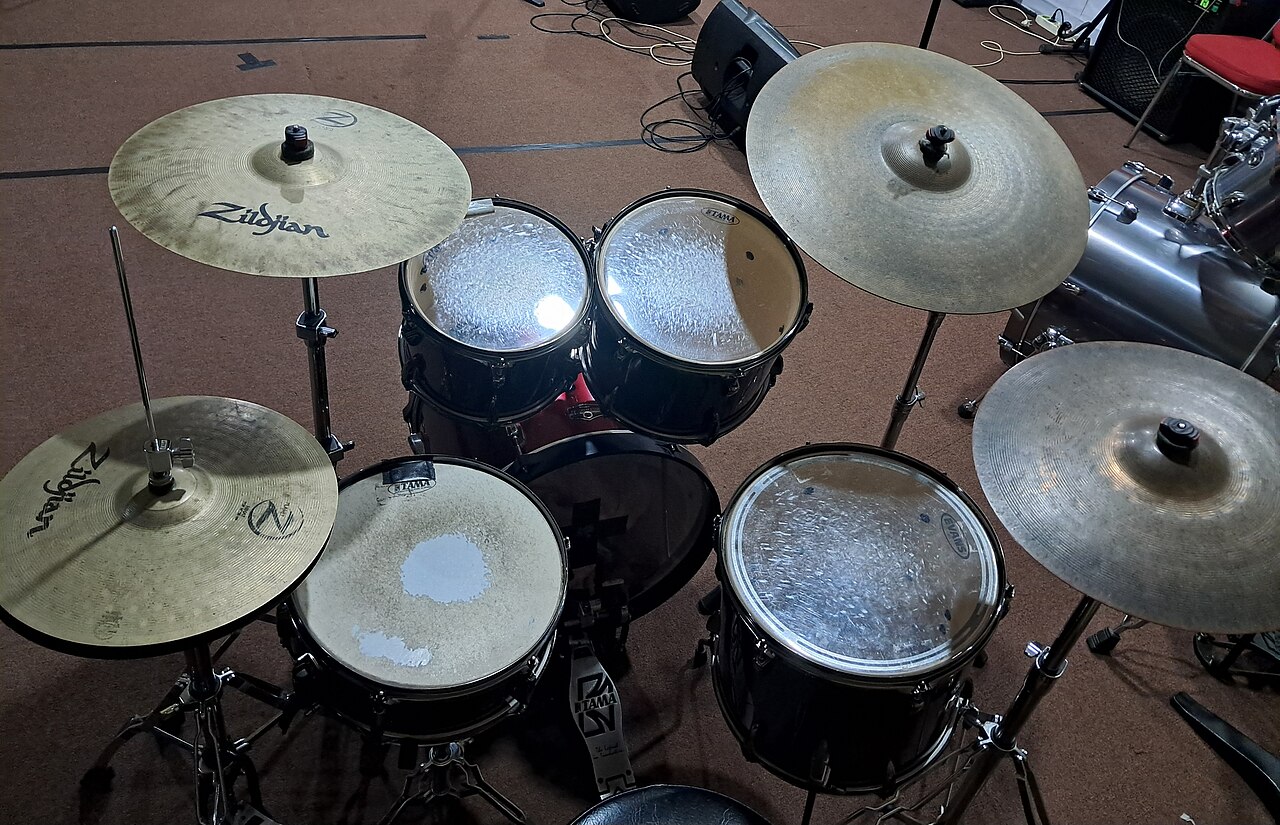
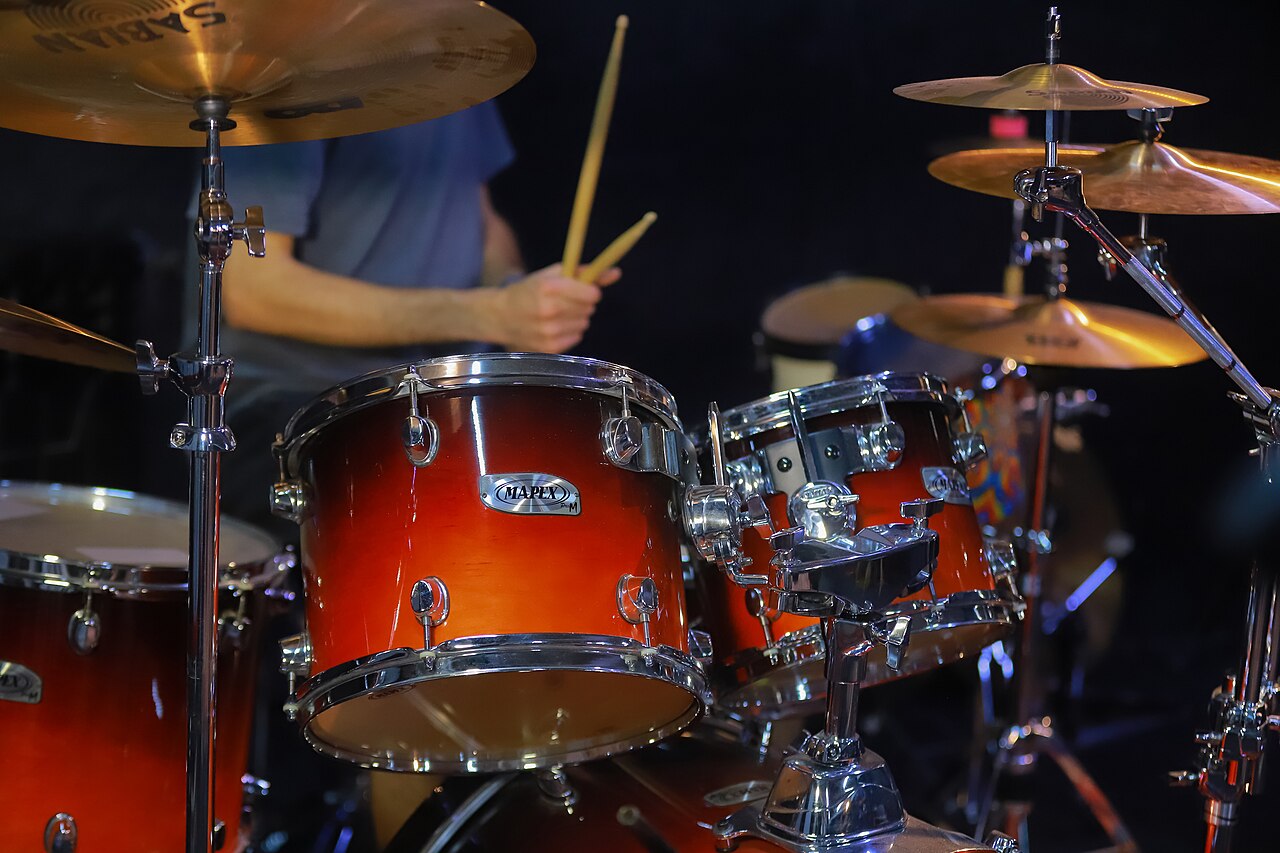
A drum kit is deliberately non-standardized, ranging from a minimal configuration of snare, bass drum, hi-hat, and a single cymbal to sprawling, expansive setups. The core architecture typically includes a snare drum on a stand, a bass drum operated by a foot pedal and beater, two or more tom-toms (rack or floor), a ride cymbal, a crash cymbal, and a pair of hi-hat cymbals playable by both hands and foot pedal. Auxiliary percussion such as tambourines or cowbells may be added. This combination of hand and foot coordination allows a single musician to sculpt sound to fit the desired effect, making the kit a versatile engine within the standard rhythm section across rock, pop, blues, and jazz.
Economic Pressures and the Kit's Cultural Reach
The drum kit's evolution was shaped as much by economics as by musical innovation. Tight budgets in musical theater pit orchestras forced bandleaders to demand that one percussionist cover multiple parts, spurring the development of metal consoles holding Chinese tom-toms, swing-out stands for snares and cymbals, and a top tray—shortened to "trap"—for whistles, klaxons, and cowbells. By the 1920s, freelance drummers supported dancers and musicians across genres, and in silent-film orchestras they served as sound-effects specialists. Despite these disruptions, the kit cemented its place as a central component of the rhythm section, appearing in Dixieland jazz, ragtime, and eventually spanning the full spectrum of popular and traditional music from rock and pop to blues and jazz.
Common Misconceptions (Editorial)
Some believe the drum kit was originally called a "drum set" or simply "drums," but it was initially referred to as a "trap set," with drummers called "trap drummers" from the late 1800s to the 1930s. Another misconception is that the hi-hat was invented in a fully modern form; in fact, William Ludwig created an early low-mounted version, and it was Baby Dodds who asked to raise it nine inches, resulting in the modern hi-hat.
Why It Matters (Editorial)
The drum kit endures because it is a uniquely efficient tool for a single musician to provide the rhythmic foundation across countless genres, from rock to jazz. Its evolution—shaped by practical constraints like theater budgets and early recording limitations—reflects how innovation often emerges from necessity, making it a living artifact of musical and cultural history.
Gallery
Frequently Asked Questions
Who is The Drum kit?
The Drum kit is a single-player percussion ensemble that bundles multiple drums, cymbals, and auxiliary instruments together for one musician to operate at once. It goes by several nicknames—including drum set and trap set—and is typically played with sticks, brushes, or foot pedals.
What are The Drum kit's powers or role?
It anchors the rhythm section across virtually every popular and traditional genre, from rock and pop to blues and jazz. Its core job is to lock in the tempo, deliver dynamic accents, and drive the forward energy of the entire ensemble.
How does The Drum kit's story end?
The Drum kit has no single ending because it remains an active, evolving instrument in recording studios and live stages around the world. Its legacy continues as electronic and hybrid kits expand what a single drummer can produce in one performance.
Why is The Drum kit important?
It consolidated what once required an entire drum section into one musician's hands, fundamentally reshaping how popular music is arranged and performed. Without it, the driving pulse that defines rock, jazz, and pop would be far harder to achieve with a single performer.
What are The Drum kit's core components?
A standard setup pairs a snare drum, bass drum, and tom-toms with a ride cymbal, crash cymbal, and hi-hat. These six pieces form the essential skeleton, though players often layer in auxiliary percussion for extra texture.
More in Musical Instruments 1-22
Spotted an error? Know more?
This is a living reference — every entry is fact-audited, and reader corrections feed straight into our audit queue. Suggest an edit · See this site's audit record