The Saxophone
Single-reed woodwind invented by Adolphe Sax in the 1840s.

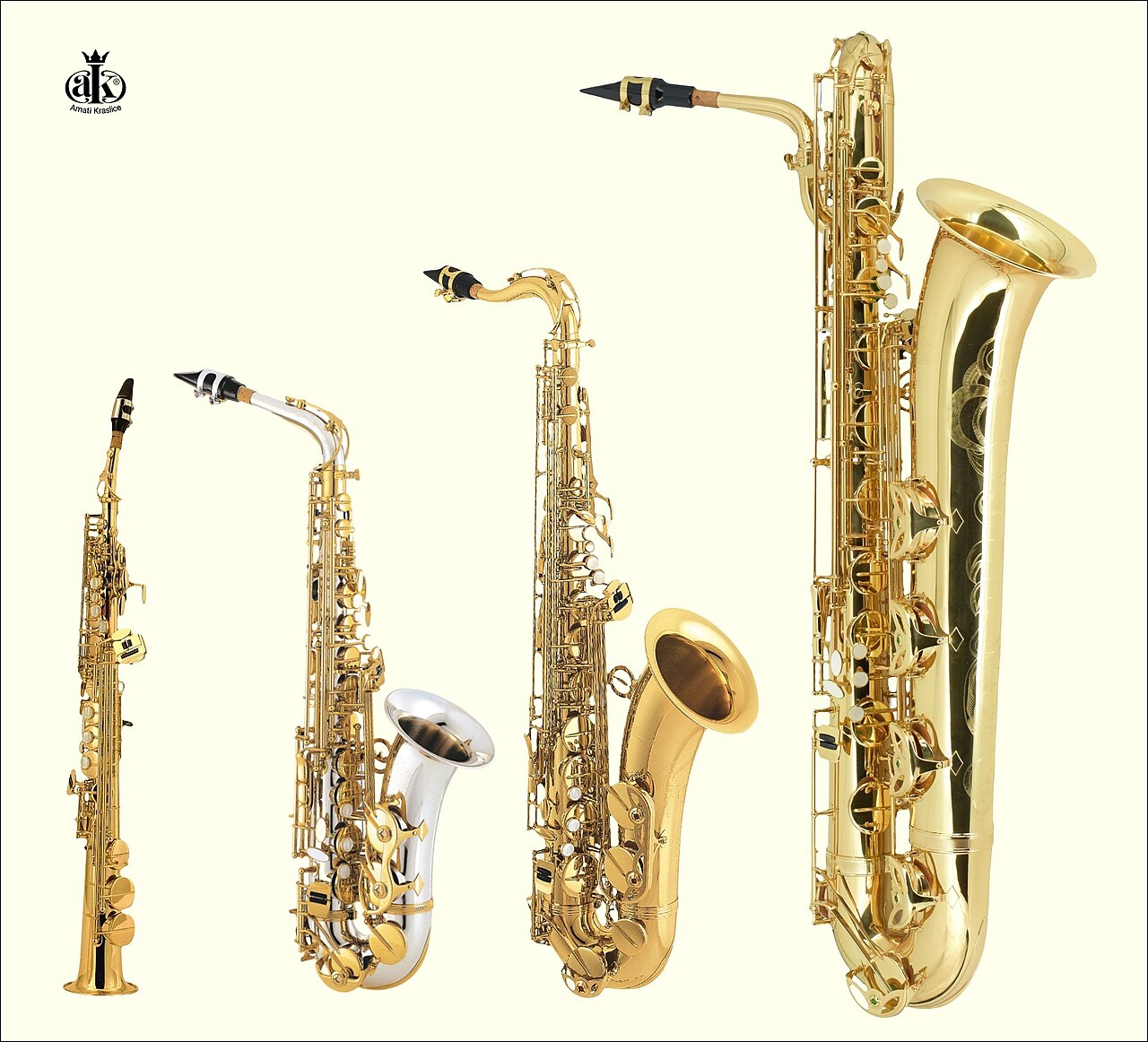
Amati Kraslice · CC BY-SA 4.0
It is used across a wide range of musical styles, including classical, military, jazz, and popular music, and is almost always treated as a transposing instrument.
- Inventor
- Adolphe Sax
- Nationality
- Belgian
- Family
- Single-reed woodwind
- Common sizes
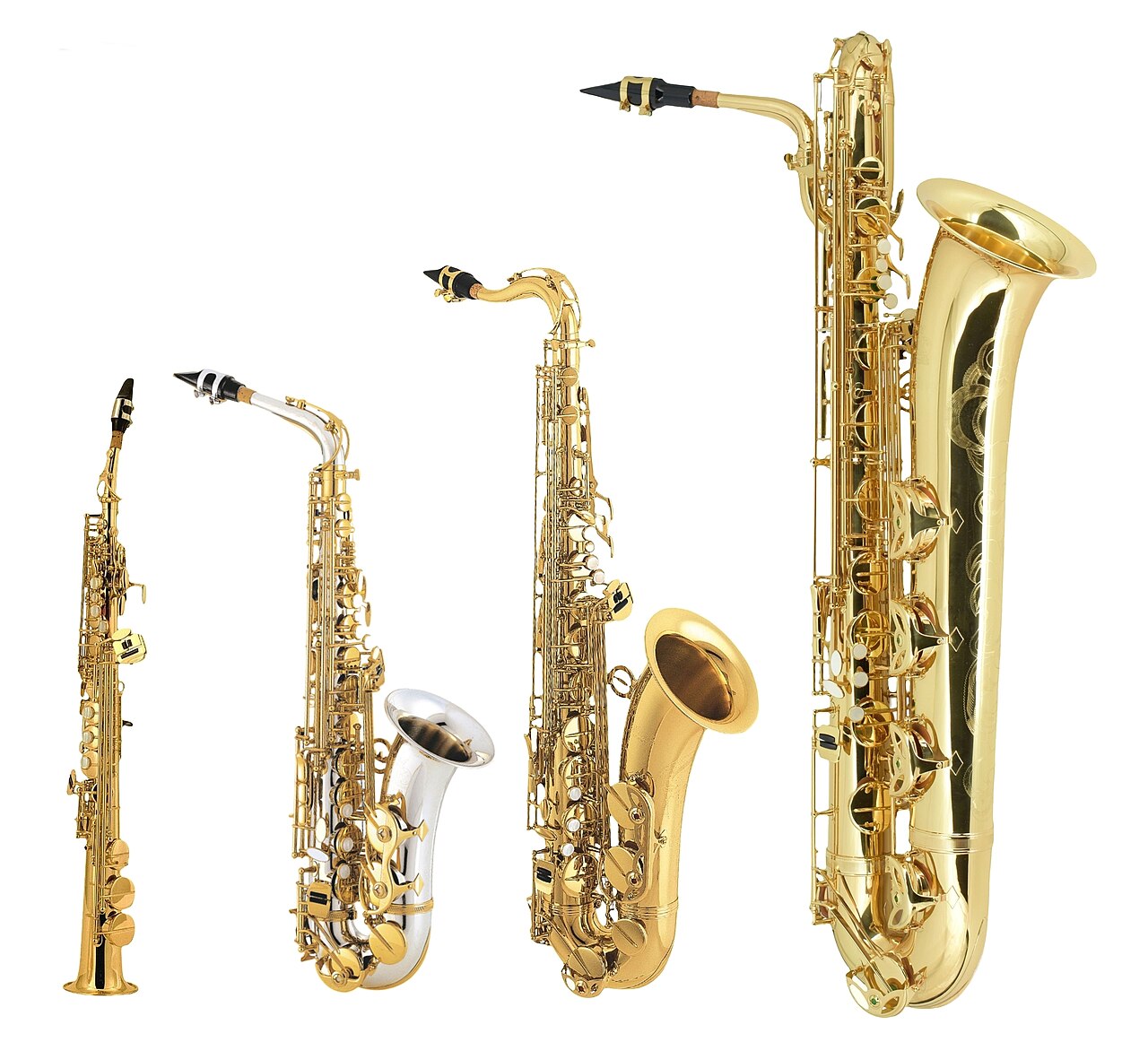
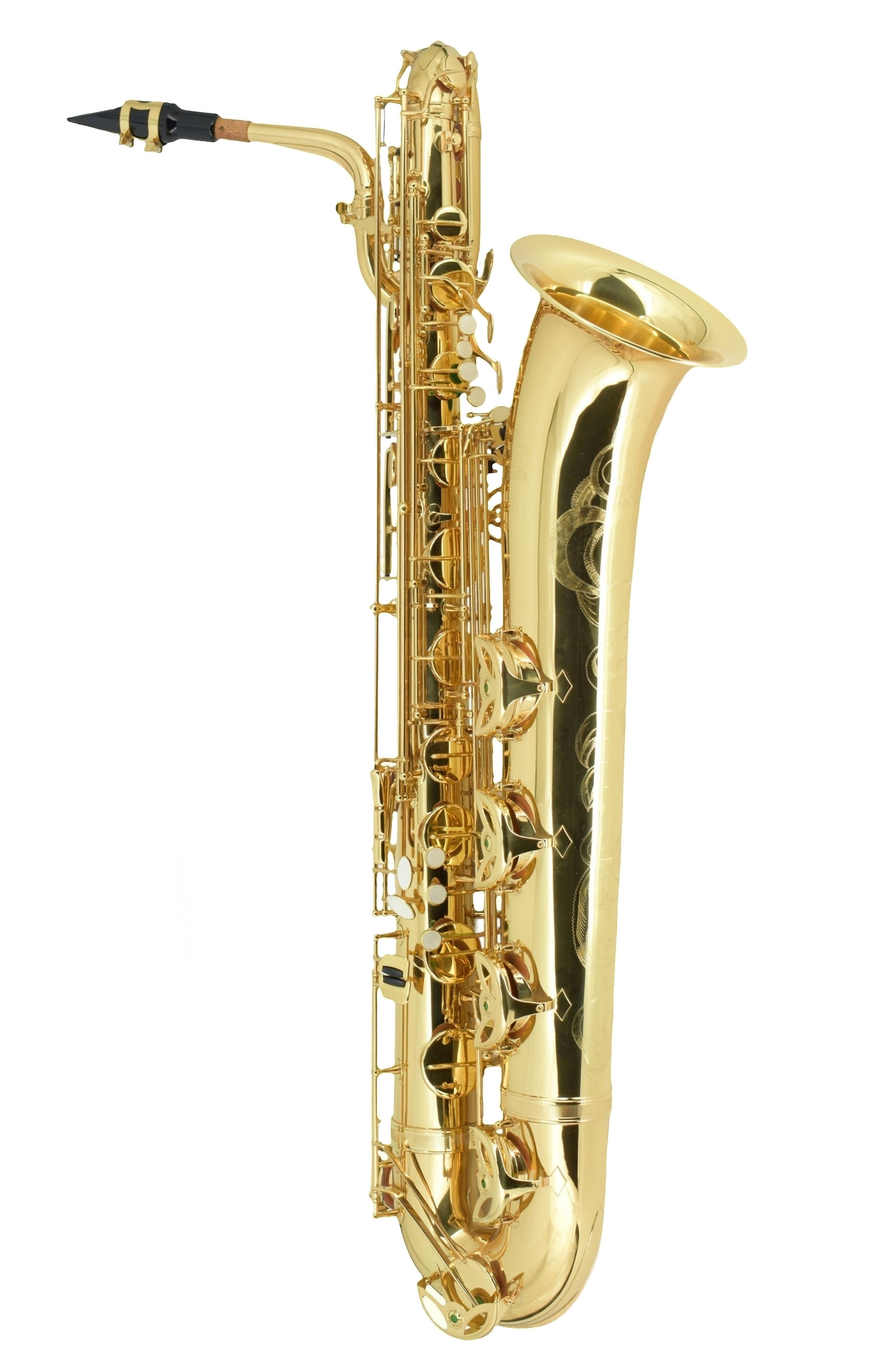
- B♭ soprano, E♭ alto, B♭ tenor, E♭ baritone
Lore & Background
Adolphe Sax invented two groups of seven saxophones each: one in C and F, the other in B♭ and E♭. The B♭ and E♭ instruments soon became dominant, while the C and F series never gained a foothold. Low-pitch saxophones match modern tuning. C soprano and C melody saxophones were made as parlor instruments in the early twentieth century, and F saxophones appeared in the late 1920s but were not accepted.
Reader's Guide
The saxophone's significance lies in its versatility across musical genres, from classical concert bands and chamber music to jazz big bands and rock horn sections. Its fingering system is consistent across all sizes, allowing players to switch instruments easily. The modern family consists entirely of B♭ and E♭ instruments, with the soprano, alto, tenor, and baritone being most common. The instrument's construction uses brass for the body and keywork, with finishes such as lacquer, silver, or gold plating. Mouthpiece design greatly affects tone, with classical players favoring warmer sounds and jazz players seeking brighter projection. The saxophone remains a staple in both formal and popular music, with a legacy rooted in Adolphe Sax's original patent.
Did You Know?
- Most modern saxophones are pitched in B♭ or E♭, with the C and F series never gaining acceptance.
- The lowest note on most modern saxophones is the written B♭ below middle C, though many baritones have a low A key.
- Saxophone reeds are made from Arundo donax cane, though fiberglass and composite reeds have been used since the mid-20th century.
Invention & Historical Evolution
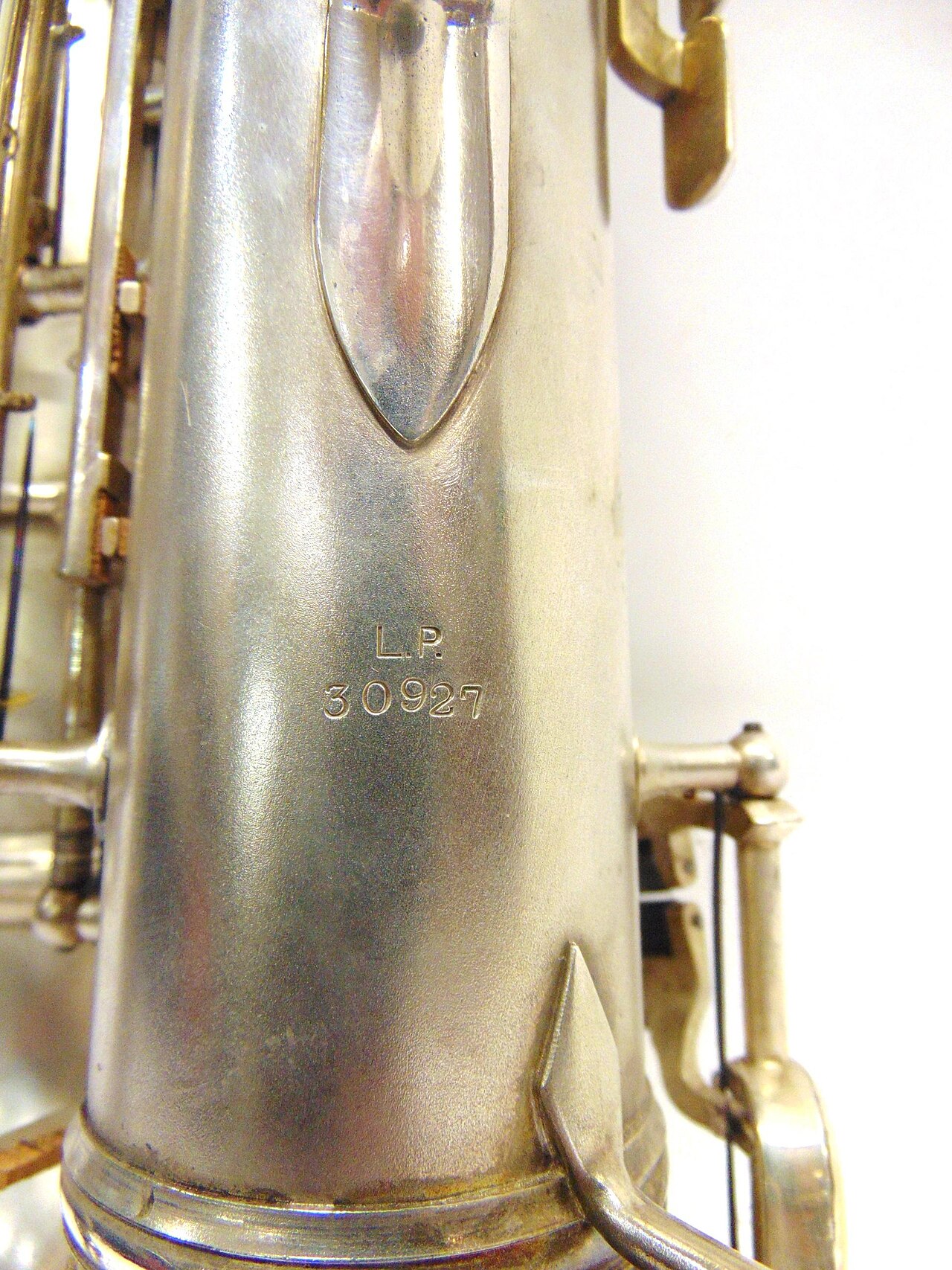
Sax envisioned two complete families of seven instruments each: one pitched in C and F, the other in B♭ and E♭. History favored the latter group, which quickly became the standard, while the C and F series never caught on and represented only a tiny share of Sax's production. These were crafted for outdoor performance and remained in production into the early twentieth century, but they are now unplayable at modern pitch and regarded as obsolete. Low-pitch versions, marked L or LP, match contemporary tuning. During the early 1900s, C soprano and C melody saxophones appeared as parlor instruments for casual musicians, and F-pitched models were introduced in the late 1920s, though neither gained lasting acceptance.
Construction & Mechanical Design
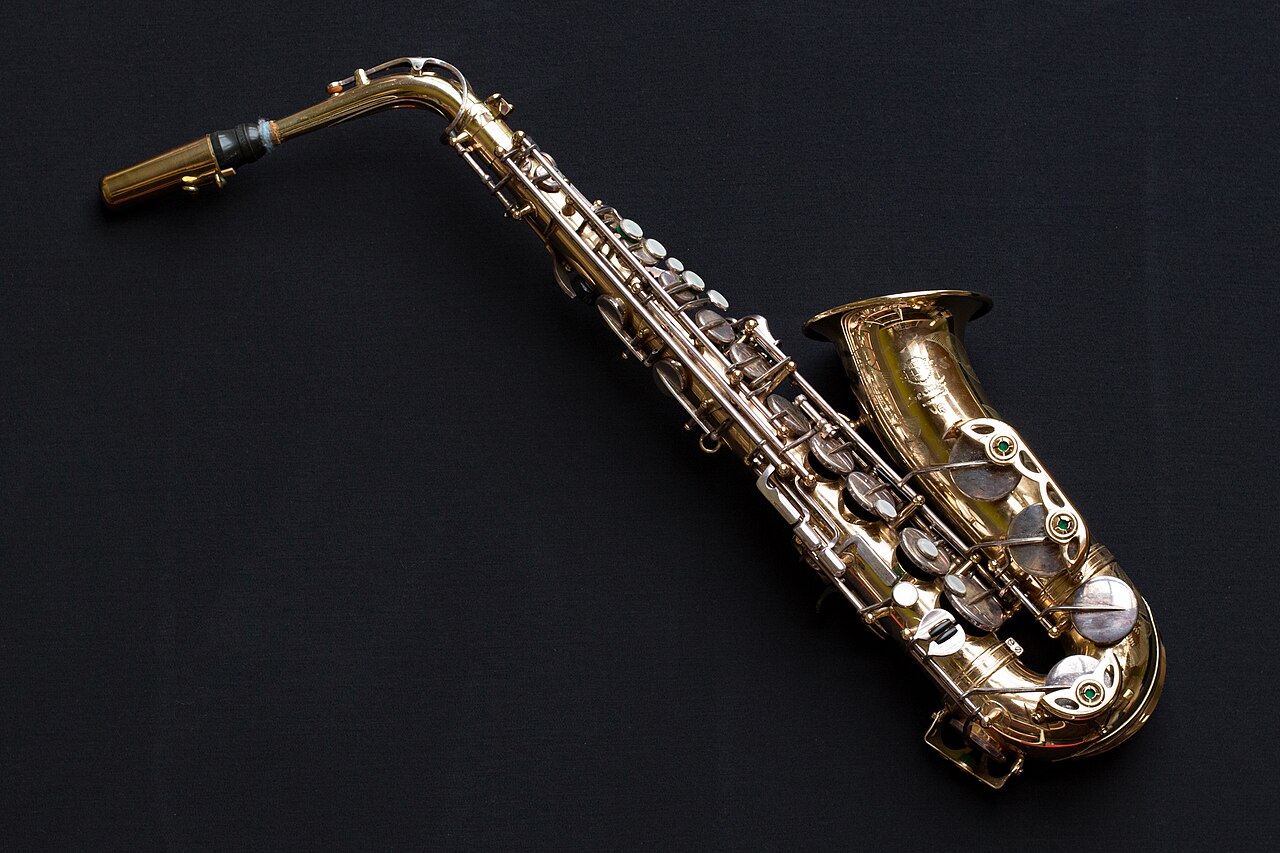
The saxophone is a single-reed woodwind with a conical body, typically fashioned from brass. Sound is generated when a reed mounted on the mouthpiece vibrates, setting a sound wave in motion within the instrument's interior. Pitch is governed by opening and closing tone holes along the body, which alters the effective length of the vibrating air column. These holes are sealed by leather pads linked to keys, most finger-operated, though some respond to the palm or the side of a finger. An octave key lifts lower notes by a full octave. The standard lowest note across most modern saxophones is the written B♭ below middle C, though nearly all baritones now include an extra key for low A, and a few altos have been built with the same addition. The traditional highest keyed note sits at F, two and a half octaves above that low B♭, but many instruments now carry an extra key for high F♯, and some modern sopranos even reach high G. Beyond that lies the altissimo register, demanding advanced embouchure control and specialized fingering. Alto and larger models feature a detachable curved neck and a U-shaped bow, while soprano and sopranino saxophones are usually straight-bodied.
Materials & Finishing
From the instrument's earliest days, the body and key cups have been formed from sheet brass stock, which lends itself to complex shaping. Keywork components are drawn from other brass alloys. Over the decades, manufacturers have experimented with alternative metals: King produced saxophones with sterling silver necks and bells from the 1930s through the early 1960s, and Yanagisawa revived the concept in the 1980s before offering instruments made entirely of sterling silver. Keilwerth and P. Mauriat have incorporated nickel silver, a copper-nickel-zinc alloy more familiar from flute construction, into certain models. Mechanical details also vary: finger buttons are typically plastic or, in traditional builds, mother of pearl, while rods, pins, and springs are usually blued or stainless steel. Felt, cork, leather, and synthetic buffers dampen key noise and refine action. Finishes range from clear or colored acrylic lacquer to silver or gold plating, the latter requiring an underlayer of silver for adhesion.
Musical Range & the Modern Family
The saxophone has found a home in an extraordinary breadth of musical contexts. It appears in classical settings, including concert bands, chamber ensembles, solo repertoire, and occasionally full orchestras, as well as in military and marching bands. In jazz it thrives in both big-band and small-combo formats, and in rock and popular music it serves as a solo voice or a member of a horn section. The modern saxophone family is composed entirely of B♭ and E♭ transposing instruments, with the four most commonly encountered being the B♭ soprano, E♭ alto, B♭ tenor, and E♭ baritone. The E♭ sopranino and B♭ bass saxophone extend the range in larger saxophone choir settings. Consecutive members of each family are pitched an octave apart. A remarkable design feature is that all saxophones share the same key arrangement and fingerings; music is written in treble clef and transposed appropriately for each instrument, so any given written note maps to the identical fingering regardless of which saxophone is being played. This uniformity makes switching between members of the family straightforward for the performer. The fingering system itself draws parallels to those of the oboe, the Boehm-system clarinet, and the flute.
Common Misconceptions (Editorial)
- Some believe that saxophones are primarily brass instruments, but they are in fact single-reed woodwinds, as noted in the family classification. - It is commonly assumed that all saxophones are pitched in B♭ or E♭, but C and F series saxophones were historically made, though they never gained widespread acceptance.
Why It Matters (Editorial)
The saxophone’s unique ability to blend the power of brass with the expressiveness of a woodwind has secured its place in genres from classical to jazz and pop. Its enduring appeal lies in how it can bridge musical traditions while maintaining a distinctive, soulful voice that continues to inspire new generations of players and listeners.
Gallery

Frequently Asked Questions
What family does the saxophone belong to?
Despite its brass exterior, the saxophone is classified as a single-reed woodwind instrument, featuring a conical body and a reed that vibrates to produce sound.
What are the most common saxophone sizes?
The four sizes you will most frequently encounter are the B♭ soprano, E♭ alto, B♭ tenor, and E♭ baritone.
In which musical genres is the saxophone used?
The instrument appears across a broad spectrum of styles, from classical orchestras and military bands to jazz ensembles and popular music.
Is the saxophone a transposing instrument?
Yes, in virtually every musical context the saxophone is treated as a transposing instrument, meaning the written pitch differs from the actual sounding pitch.
More in Musical Instruments 1-22
Spotted an error? Know more?
This is a living reference — every entry is fact-audited, and reader corrections feed straight into our audit queue. Suggest an edit · See this site's audit record